The Sound of East Galway: A Guide to the Rhythmic Heart of Irish Music

Speed is often mistaken for skill in a crowded session, but true mastery lives in the space between the notes. For those who have spent decades listening, the sound of East Galway isn't just a regional quirk; it's a deliberate, rhythmic choice of melodic restraint and that unmistakable lonesome tonality. It's perfectly normal to feel a bit lost when trying to distinguish between the driving lift of Sligo and the more relaxed, pulsing heartbeat of Galway's eastern reaches. You aren't alone if you've struggled to pin down those subtle shifts in the rhythm or wondered why certain tunes carry such a haunting weight.
This guide is here to bridge that gap. We'll dive deep into the technical nuances and historical figures such as Paddy Fahey and Paddy Kelly, who shaped this heritage. You'll learn how to identify the style by ear and discover the masters who kept the flame alive through generations. From the legacy of the Ballinakill Céilí Band to modern collections like the album Not Before Time, we'll explore the heart of this storied tradition together. It's time to truly hear the rhythm.
Key Takeaways
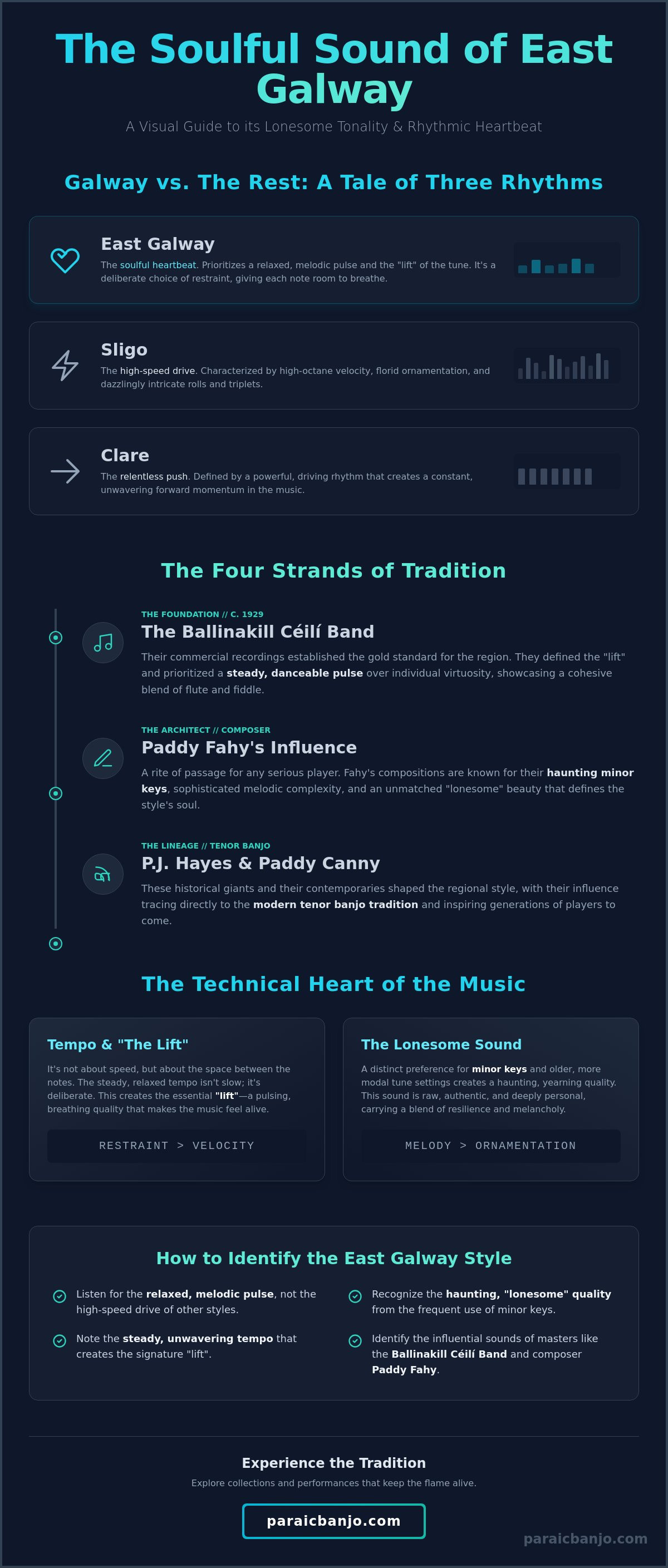
Identify the relaxed, melodic pulse that sets this tradition apart from the high-speed drive of Sligo or the rhythmic push of Clare.
Explore the foundational influence of the Ballinakill Céilí Band and the sophisticated, intricate compositions of the legendary Paddy Fahey.
Master the technical nuances of the "lonesome sound," learning how a steady tempo creates the essential lift that defines the sound of East Galway.
Trace the lineage of historical giants like P.J. Hayes and Paddy Canny to see how their style shaped the modern tenor banjo tradition.
Discover how decades of musical passion were distilled into a definitive project that honours the Style masters of the past.
Table of Contents
What Defines the Sound of East Galway?
The sound of East Galway isn't something you just hear; it's something you feel in your bones. Unlike the high-octane, florid speed of the Sligo style or the driving, dancing rhythm found in County Clare, this music takes its time. It's a relaxed, melodic tradition that prioritises the “flow” of this regional style, which represents the very pinnacle of reflective expression. It's a deliberate choice of restraint. The music breathes. Every note is given the room it needs to resonate, often creating a haunting, lonesome quality that lingers long after the session ends.
Geographically, this tradition is anchored in the fertile lands stretching from the banks of the River Shannon down to the Clare border and up as far as the middle of the county. It's a specific pocket of the country where the pace of life once dictated the tempo of the music played. This isn't music for a frantic race. It's music for a conversation. It demands a listener's full attention, rewarding them with layers of melodic complexity that faster styles often gloss over in their hurry to reach the finish line.
The Origins of the Regional Pulse
The landscape itself played a huge role in shaping the tempo. In the quiet, rolling fields of East Galway, isolated rural communities became guardians of unique melodic variations. Without the influence of outside broadcast or rapid travel, these players developed a deep, internal rhythm. This isolation allowed for the preservation of music from the West of Ireland that felt ancient even a century ago. The pulse is steady. It's unwavering. It mirrors the heartbeat of a community that valued the story within the tune above all else.
Galway vs. The Rest: A Comparative Overview
When you sit in a session, the differences become clear. While a Sligo player might dazzle you with intricate rolls and triplets at a quick pace, a master of the sound of East Galway will draw you in with subtle ornamentation and a preference for minor keys, or modal expression. There's a distinct leaning toward "lonesome" settings. These are tunes that carry a blend of yearning and resilience. The note selection often feels older, more modal, and less polished than the modern, commercialised versions of traditional music you might hear on the radio. It's raw, it's authentic, and it's deeply personal. This is why we call it the heart of the tradition. It's not just playing; it's a statement of identity.
The Four Main Strands of the East Galway Tradition
To truly grasp the sound of East Galway, you have to look at it as a river fed by four powerful streams. It isn't a stand-alone monolith. Each strand brings a different texture to the rhythm, from the structured ensemble playing of the early 20th century to the highly sophisticated, minor-key compositions that define modern sessions. Understanding these branches is the key to hearing the music with a seasoned ear. It's about recognising the DNA of the masters in every phrase you hear today. It's a journey through time and technique.
The Ballinakill Céilí Band and the Early 1900s
The bedrock of the organised regional sound lies with the Ballinakill Céilí Band. In 1929, their first commercial recordings for HMV sent shockwaves through the musical world. They defined the "lift" that we still chase today. This wasn't just a group of musicians; it was a cohesive unit that prioritised a steady, danceable pulse over individual virtuosity. The blend of the flute and fiddle with the box (accordion) was central to this era. As the music moved from the intimacy of house dances to the global stage of gramophone records, this ensemble style became the gold standard. It preserved the melodic variations of rural Galway while giving them a professional, polished edge that resonated far beyond county lines.
The Paddy Fahey Influence: Melodic Complexity
If Ballinakill is the foundation, Paddy Fahey is the architect of the style's sophisticated soul. His compositions are a rite of passage for any serious player. A "Fahey Tune" is instantly recognisable by its haunting minor keys and unexpected melodic turns. He didn't just write tunes; he wrote atmospheres. These melodies often lack names, known simply by numbers such as "Fahey’s No.4”, yet they carry a weight of "lonesome" beauty that is unmatched. For banjo players, mastering his intricate settings requires a delicate touch and a deep understanding of note selection. His legacy ensures that the sound of East Galway remains technically challenging and emotionally resonant in every modern session. Paddy Kelly, the renowned fiddle master and composer, who, like Fahey, played with the famed Aughrim Slopes Céilí Band of East Galway, was also a brilliant architect of some of the best, most recognised and lyrical tunes from this region.
Beyond the fiddle and flute, the accordion players of the region added their own distinct flavours. Paddy O’Brien brought a level of precision and complex ornamentation that demanded a new kind of technical mastery. On the other hand, Joe Cooley represented the raw, energetic soul of the "box." His playing was steady as a heartbeat, filled with a driving spirit that never felt rushed. You can hear the echoes of these masters in the tracks of the Not Before Time digital album, where the banjo takes up the mantle of this storied heritage. These four strands together create a musical language that is rich, varied, and deeply rooted in the soil of the West.
The Technical Heart: Rhythm, Tempo, and the Lonesome Sound
To truly master the sound of East Galway, you have to look past the fingers and listen for the "nyaaah." This isn't a technical term you'll find in a standard music theory book. It's the intangible, gritty soul that identifies a musician from this specific corner of the world. It’s a way of leaning into a note, a subtle bending of the pitch that suggests a world of hidden emotion. This regional fingerprint relies heavily on specific note selection, often utilising flattened sevenths or thirds to create a modal feel that sounds older and more grounded than modern major scales. Ornamentation here isn't just decoration; it's a rhythmic pulse. Long rolls and tight cranns are used to emphasise the beat rather than to show off speed. It’s about the depth of the phrase, not the number of notes you can cram into a bar.
Rhythmic Restraint: Speed is Not the Goal
In many Irish sessions, there's a temptation to turn every reel into a drag race. In East Galway, that’s the quickest way to lose the respect of the room. Speed is the enemy of the “flow." When you play too fast, you destroy the intricate Galway swing that gives the music its life. The secret lies in the backbeat. There's a microscopic delay on certain beats that creates a sense of effortless momentum. It’s a relaxed, pulsing energy that makes people want to dance without feeling rushed. The tenor banjo is uniquely suited to this rhythmic precision. Its percussive nature allows a player to define that backbeat with absolute clarity, acting as both a melodic lead and a rhythmic anchor for the entire group. It’s about holding back just enough to let the tune breathe.
The Anatomy of the Lonesome Sound
The "lonesome sound" is a concept that often confuses newcomers, yet it's the very core of our tradition. It’s a complex blend of yearning and resilience. Technically, this is achieved through a mastery of specific scales and a deliberate use of "the sigh." This is a melodic ornament where a note seems to drop off or pull back, mimicking the natural cadence of the human voice. This connection isn't accidental. The music is deeply intertwined with Gaeilge, the Irish language. The phrasing of a reel often follows the rhythmic patterns of local speech and sean-nós singing. When you hear a Galway fiddle or banjo phrase that feels like a lament, even when the tempo is upbeat, you’re hearing that lonesome heritage. It’s a musical echo of the landscape itself; beautiful, rugged, and filled with a quiet, enduring strength.
Masters of the Style: From Ballinakill to the Modern Session
If you want to understand why this music endures, you have to look at the people who carried it through the lean years. The sound of East Galway was preserved by giants who saw the beauty in its slow, pulsing rhythm, even as the rest of the world sped up. P.J. Hayes and Paddy Canny are names that command instant respect in any kitchen or pub from Loughrea to Tulla. Their playing wasn't just about notes; it was about a shared breath. While the Tulla Céilí Band is often the first name people mention, its soul was deeply fed by the East Galway masters who brought that signature lonesome lift to the fiddle and flute sections. This wasn't just a performance. It was a way of life that required decades of listening and learning.
Archival recordings play a massive role in keeping this flame alive. Without the field recordings of the mid-20th century, many of the subtle melodic variations unique to this region might have been lost to the more homogenised "radio style" of playing. Modern torchbearers spend hours dissecting these old tapes, not just for the tunes, but for the spirit behind them. It’s a process of musical archaeology. They aren't just playing tunes from the past; they’re trying to capture the very essence of a community's heartbeat. This dedication ensures that the sound of East Galway remains a living, breathing tradition in the 21st century.
The Banjo in the West: A Rhythmic Revolution
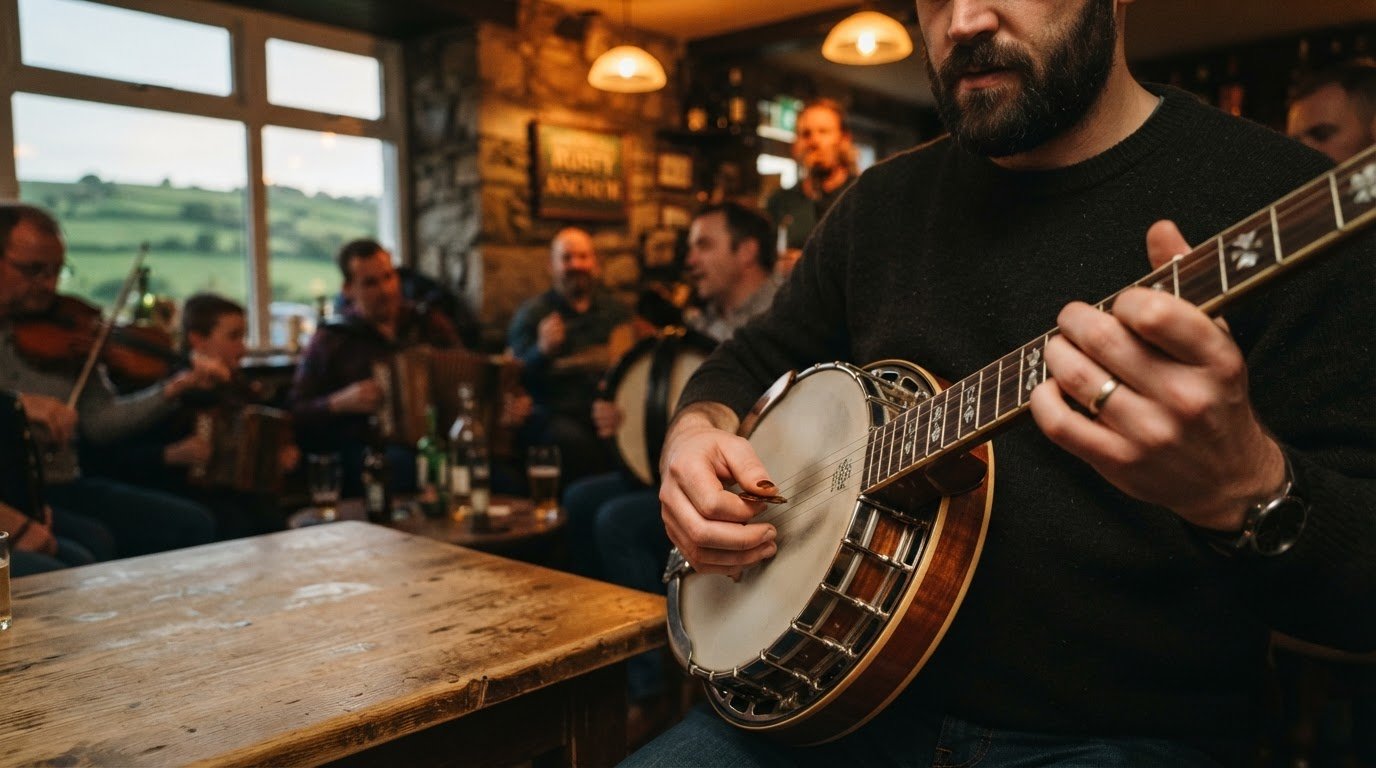
The tenor banjo's rise in this region is nothing short of a rhythmic revolution. Originally seen as a percussive background instrument, it transitioned into a formidable lead voice in the hands of players who understood the East Galway flute and fiddle styles. By mimicking the articulate, flowing phrasing of the flute, banjo players developed a unique short-scale sound that prioritised clarity and complementarity. It’s a delicate, while still vibrant approach that perfectly complements the steady heartbeat of the regional style. You can hear this specific heritage brought to life in the Not Before Time – 39 Years in the Making digital album, which stands as a definitive statement of this banjo lineage.
Legendary Sessions and the Living Tradition
Today, the tradition lives on in the quiet corners of pubs and traditional music festivals all over Ireland and beyond. Purists are increasingly turning back to the "old style" of playing that prioritises feeling over flashiness. Sessions in East Galway and East Clare remain the best places to witness this living history. It’s a community of learners and masters, all dedicated to the same musical restraint. Whether it’s a young player at their first Fleadh or a seasoned veteran in a corner session, the goal remains the same: to find the flow, together, and keep the rhythm steady. This is where the music truly belongs, passed from hand to hand and heart to heart.
Experiencing the Tradition: Páraic Mac Donnchadha and 'Not Before Time'
Páraic Mac Donnchadha didn't rush into the studio to make his mark. He spent nearly four decades absorbing the regional pulse, listening to the old masters, and letting the music settle into his very marrow. This wasn't a project born of a weekend session; it was a lifetime in the making. When you listen to his playing, you aren't just hearing a tenor banjo. You're hearing the sound of East Galway distilled through thirty-nine years of dedication. It's a definitive statement of a career spent honouring the "lonesome" lift and the steady, breathing, flowing rhythm that we've explored in this guide. This collection is warm and rhythmic, providing a rare link between the historical giants of the past and the vibrant energy of today’s sessions.
Across 18 carefully curated tracks, the album 'Not Before Time – 39 Years in the Making' captures the raw, unfiltered essence of the tradition. It doesn't aim for the sterile perfection of a modern pop record. Instead, it prioritises the "nyaaah" and the rhythmic flow that can only be found when musicians are truly locked into the same heartbeat. It's a celebration of a journey that took time, patience, and a deep love for the craft.
A Debut Decades in the Making
In the world of traditional music, patience is more than a virtue; it's a requirement. Páraic understood that to capture the true sound of East Galway, he needed to record live. By gathering a group of world-class collaborators, he built a wall of sound that feels as though you've stepped directly into a storied kitchen session. There is a sense of relief and joy in these recordings, a feeling that this work was finally ready to be shared with the world. It’s an invitation to join a musical conversation that has been happening for over a century.
How to Start Your East Galway Music Collection
If you're looking to ground your own collection in authentic regional style, there's no better place to start. For the true enthusiast, the physical CD is a must-have. It comes with extensive, detailed liner notes that act as a roadmap through the history and technical nuances of the tunes, providing the kind of background that only a seasoned master can offer. If you prefer a more modern approach, digital downloads and individual tracks are also available for your collection.
Physical CD: Includes a beautiful booklet with photos, detailed historical and technical notes.
Digital Album: Instant access to all 18 tracks for your digital library.
Individual Tracks: Perfect for those looking for a specific reel or jig to master.
Don't just take our word for it; listen for yourself. This is the heart of the tradition, recorded not because it had to be, but because the time was finally right. Explore the tracks and order your copy of 'Not Before Time' and bring the authentic pulse of East Galway into your home. See you at the next session!
Carry the Living Tradition Forward
You've journeyed through the steady pulse of the Ballinakill masters and the intricate, minor-key genius of Paddy Fahey and the composition genius of his counterpart and musical colleague, Paddy Kelly. By now, it's clear that the "lonesome sound" isn't just a fleeting mood; it's a technical mastery of the "nyaaah" and the rhythmic backbeat. This deep dive into the sound of East Galway shows that true traditional music is a conversation across generations that requires patience and soul. It’s about more than just notes. It’s about the lift and flow that make a tune breathe.
Páraic Mac Donnchadha has spent 39 years distilling this heritage into one definitive debut. With 18 tracks recorded live alongside a host of truly expert musicians, the album captures the raw, infectious energy of a real session. The physical CD even includes detailed liner notes to guide you through the history of every set. It’s the perfect way to anchor your collection in authentic regional style.
Order "Not Before Time" – The Definitive East Galway Banjo Album to bring this storied tradition into your own home. Keep the rhythm steady and the heart open. We'll see you at the next session!
Frequently Asked Questions
What is the East Galway style of Irish music?
The East Galway style is a regional tradition characterised by a relaxed, melodic approach and a soulful, rhythmic pulse. It prioritises the “flow" of the tune over sheer speed. This style often features minor keys and specific ornamentation that creates a distinct "lonesome" quality. It's a living tradition rooted deeply in the rural landscape between the South and East Galway and the Clare border.
How does East Galway style differ from the Clare style?
While both styles value a strong rhythm, the Clare style is often more driving and percussive. In contrast, the sound of East Galway is more melodic, more reflective and restrained. Clare music often has a consistent "push," but the Galway tradition relies on a subtle backbeat and a more laid-back ‘flow’ tempo. This allows for more intricate melodic variations and a haunting tonality that feels older and more modal.
Who are the most famous East Galway musicians?
Historical giants include fiddle players like Paddy Fahey, Paddy Kelly, P.J. Hayes, Paddy Canny and Conor Tully. Flute masters from the region include Eddie Moloney and Paddy Carty. These masters defined the sophisticated melodic structures and lonesome settings we still study today. Accordion players like Joe Cooley and Paddy O’Brien, among other greats of the region also left an indelible mark, bringing their own unique pulse to the regional sound. Their influence continues to thrive through modern recordings and dedicated session circles across the globe.
What does the term 'lonesome sound' mean in Irish music?
The "lonesome sound" refers to a specific emotional quality that blends yearning with resilience. It's achieved technically through flattened notes, modal scales, and a melodic "sigh" that mimics the natural cadence of the human voice. This isn't about being sad. It's about a deep, soulful connection to the music’s roots and the Irish language. It’s the intangible "nyaaah" that identifies a true master.
Is the tenor banjo a traditional instrument in East Galway?
Yes, the tenor banjo has a long and storied history in the west of Ireland. While it was once seen primarily as a rhythmic background instrument, it evolved into a lead voice by adopting the phrasing and ornamentation of the flute and fiddle. In the East Galway style, its percussive nature has given way to a more sympathetic, complementary tempo and pace that make it perfect for defining the steady, pulsing rhythm so central to this regional heritage. It also brings a unique tune clarity and bounce to any session.
Why is tempo so important in the East Galway regional style?
Tempo is everything because playing too fast destroys the “flow" and the intricate swing of the tunes. A steady, relaxed pace is essential to allow the melodic complexity and the lonesome tonality to shine. If you rush the rhythm, you lose the melodic restraint that defines the sound of East Galway. It’s about finding a pulse that feels effortless yet powerful, giving the music room to breathe.
Where can I find authentic East Galway music recordings?
You can find this authentic pulse in archival field recordings and classic albums from the Tulla or Ballinakill bands. For a modern perspective that honours this heritage, the album 'Not Before Time – 39 Years in the Making' offers 18 tracks recorded live to capture that true session energy. It’s available as a physical CD with detailed historical notes or as a digital download for modern listeners seeking that genuine West of Ireland sound.

Comments