Explore modern traditional Irish bands, their origins and sound

Updated: 5 days ago
Modern traditional Irish bands don’t all sound alike: Lúnasa brings jazz into traditional tunes, while Beoga has carried Irish trad into international pop through its collaboration with Ed Sheeran on “Galway Girl.” For a first listen, add Ye Vagabonds and Lankum to the mix, then notice how each group shapes its sound differently. There’s no single sound that defines the scene.
If you’re drawn to the lift of a fiddle tune or the pulse of a bodhrán, there’s plenty to connect with here. The pleasure is hearing familiar instruments and melodies meet fresh arrangements, voices, and influences.
This guide explores how modern traditional Irish bands formed, how their approaches to Irish trad have changed, and how some have reached listeners beyond Ireland. You’ll meet bands across generations, discover the instruments and choices that shape their sound, and find a practical starting point for listening. From a close-knit session feel to arrangements that fold in jazz, rock, or pop, there’s a rich tradition to explore. Turn up the tune and listen for what each band brings to it.
Table of Contents
1. Band origins and formation dates
Formation dates show how Irish groups carried older musical traditions into new eras. The Chieftains formed in Dublin in 1962, the same year The Dubliners were founded. Their beginnings sit within a wider story: over roughly the last 100 years, Ireland has produced celebrated writers, internationally successful rock bands, and artists who created new musical directions. These groups offer two different starting points for exploring that history.
The Chieftains became closely associated with Irish traditional music, while The Dubliners brought songs and ballads to a broad audience. The Dubliners officially disbanded in 2012, ending a run that began five decades earlier. Their long history makes their recordings useful listening for anyone tracing how a group can carry traditional material across generations. Start with a song from each band, then compare the ensemble sound and vocal style.
Clannad formed as a family group in 1970, adding another kind of beginning to the story. Family connections can shape how musicians learn, rehearse, and share a repertoire, though each band develops its own character. For a listening trail, set Clannad beside The Chieftains: the contrast helps reveal how different lineups can approach Irish musical roots.
Later formations expanded the picture beyond strictly traditional ensembles. The Saw Doctors formed in Tuam, County Galway, in 1986, while The Undertones formed in Derry in 1974. Westlife formed in Sligo in 1998. These bands represent different strands of Irish popular music, rather than one single trad style. Their origins help place traditional groups within a larger musical map.
Some newer acts have also changed names or moved as their careers developed. Lankum was formerly known as Lynched, a detail that helps listeners connect earlier releases with the band’s later identity. Ye Vagabonds moved to Dublin in 2012. When exploring either group, note the name and location alongside the album or track you hear; that simple habit makes an evolving scene easier to follow.
The Southern Fold formed in 2014, founded by Kilkenny native Emlyn Holden. Fontaines D.C. also formed in Dublin in 2014, though their sound belongs to a different musical lane. Their shared formation year is a reminder that a date alone doesn’t define a band’s style. Listen for the instruments, vocals, and arrangements that distinguish each group.
Together, these origins make a useful timeline: The Chieftains and The Dubliners began in 1962, Clannad in 1970, The Saw Doctors in 1986, and The Southern Fold and Fontaines D.C. in 2014. The modern traditional Irish bands conversation spans generations and genres. Compare formation dates with released albums, then follow the sound from early recordings to later work.
2. Contemporary approaches to Irish trad
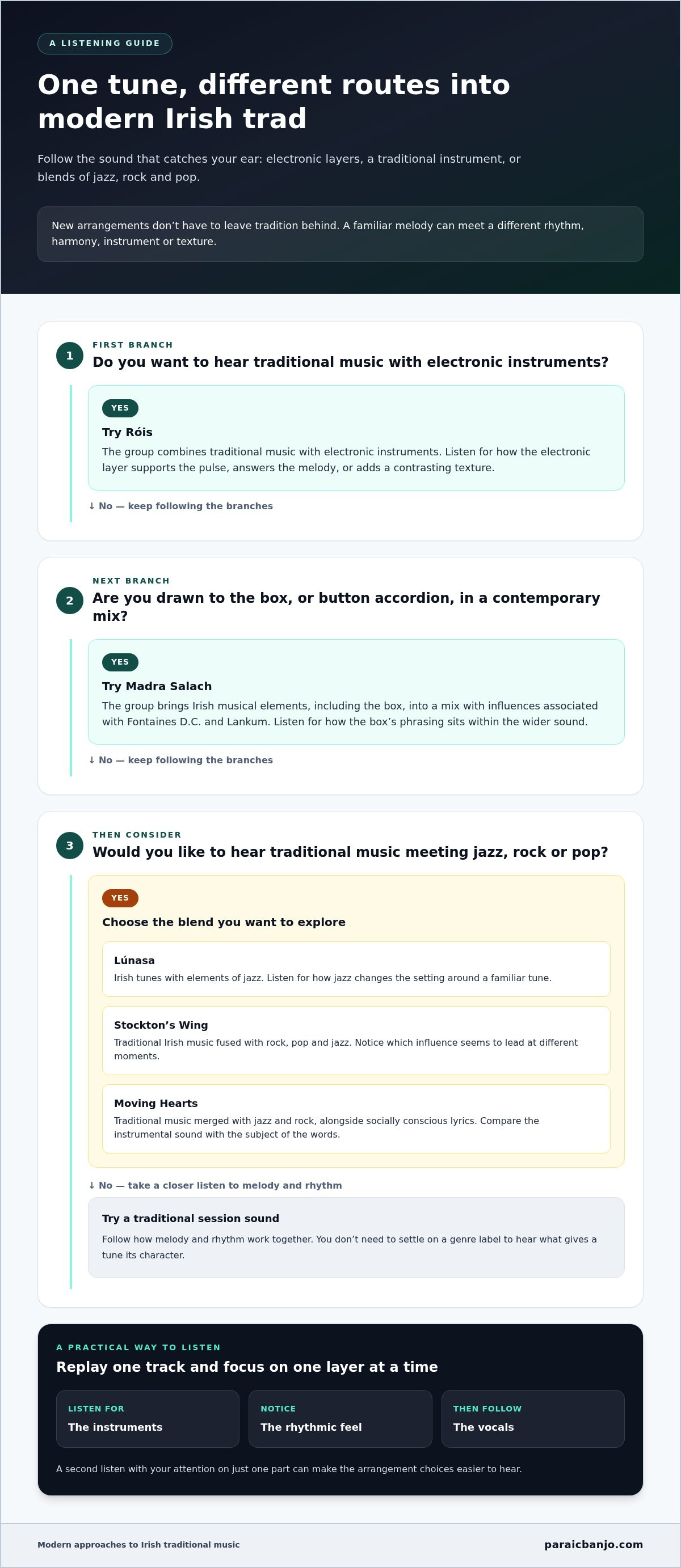
Irish music keeps traditional melodies alive by letting musicians reshape the sound around them. Over the last decade, Ireland’s independent scene has seen a folk revival, while Irish music has also evolved into a wider contemporary landscape. That doesn’t mean every new arrangement abandons tradition. The change may come through jazz harmony, a rock rhythm, an electronic layer, or a new way of placing instruments together.
Lúnasa offers a clear example of tradition meeting another style: the group blends Irish tunes with elements of jazz. Listen for the tune’s familiar melodic shape, then notice how the arrangement can make its movement feel more spacious or unexpected. Jazz influence doesn’t replace the tune. It changes the musical setting around it, giving the players room to explore timing, harmony, and interplay.
Stockton’s Wing took a broader route, fusing traditional Irish music with rock, pop, and jazz. Each style brings a different energy to the same musical foundation. Rock can give a tune extra drive; pop can bring a direct, memorable shape; jazz can open up the arrangement. Listen for which influence leads at different moments, rather than deciding the band belongs to just one category.
Moving Hearts also merged traditional music with jazz and rock, but its approach included socially conscious lyrics. That pairing shows how a group can bring contemporary concerns into an Irish musical framework. Notice the contrast between the instrumental sound and the subject of the words. A driving arrangement can carry a serious message without losing its rhythmic pull.
Newer groups make the blend even less predictable. Madra Salach combines influences associated with Fontaines D.C. and Lankum with Irish musical elements, including the box, or button accordion. The result brings contemporary band influences into conversation with a recognisably traditional instrument. Listen for how the box’s breath-driven phrasing sits within the group’s broader sound. It can anchor the music in tradition even as other influences push outward.
Róis takes another path, combining traditional music with electronic instruments. The useful listening question isn’t whether a sound is old or new, but how each part functions. Does the electronic layer support the tune’s pulse, answer its melody, or create a contrasting texture? Those details reveal how arrangement choices shape the listener’s experience.
To explore these approaches, compare one track each from Lúnasa, Moving Hearts, Madra Salach, and Róis. Notice the instruments, rhythmic feel, and role of the vocals. Then revisit the track and focus on one layer at a time. For a contrasting, close-up example of traditional Irish session sound, listen for how melody and rhythm work together.
3. Modern Irish bands and their international success
International success can take different forms: a collaboration that introduces Irish music to pop listeners, or a headlining show before a large crowd. Beoga’s collaboration with Ed Sheeran on “Galway Girl” is one example of Irish musicians working across genres. It’s a useful starting point: hear the track, then explore Beoga’s other music to notice how the group’s own sound sits alongside that crossover moment.
Fontaines D.C. offer a different measure of reach. The band progressed from support slots at Dublin’s Workman’s Club to a headlining spot at Finsbury Park for 50,000 people. That journey reflects how a group can grow from local stages to a major outdoor audience. It also shows why success isn’t captured by one song or one venue alone; the scale and setting of a performance add another part of the story.
For an event, start by deciding what you want the music to do: drive dancing, provide a listening focus, or create atmosphere between other parts of the program. Then consider the band’s lineup, date, location, and set requirements. The cost depends on those details and the musicians involved, so there isn’t one standard fee for every booking.
Festival audiences also help carry Irish music across borders. The Festival Interceltique de Lorient in France attracts upwards of one million visitors each summer. It’s a striking example of international interest in Celtic music, though the festival’s attendance shouldn’t be mistaken for a measure of any one band’s popularity. For listeners, it’s a reminder to explore beyond familiar playlists and follow festival lineups to discover new names.
As you listen, notice what travels well between settings. A distinctive singer, a memorable melody, or a strong rhythmic pulse can make a performance compelling even to people unfamiliar with the group’s background. These features don’t erase local roots; they give listeners a way into the music before they learn its history.
Try this listening route: play Beoga’s “Galway Girl,” then a Fontaines D.C. recording, and compare how each act reaches audiences through a different musical identity. Ask what you hear first, what the instruments add, and what might make you keep listening. That small exercise turns international success from a headline into a closer, more personal listen.
4. Traditional instruments and ensemble lineups
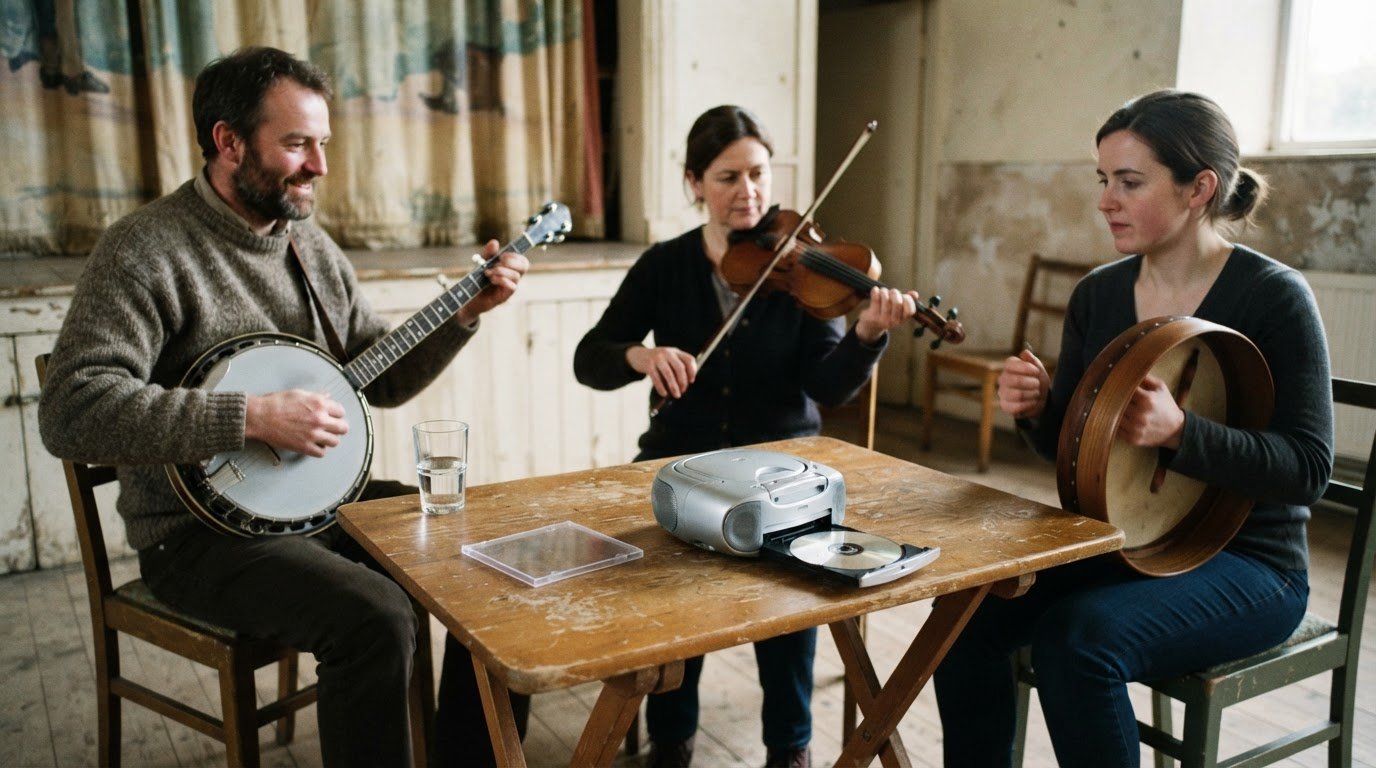
A traditional Irish ensemble has no single fixed lineup. A fiddle might carry the melody, while a bodhrán, a shallow frame drum, adds a steady pulse. Flute, tin whistle, accordion, and uilleann pipes can each take the lead instead. This mix lets bands shape traditional music with different textures, from bright and nimble to warm and sustained.
Listen first for the melody instrument. A fiddle often makes its notes feel quick and ornamented, while a flute or tin whistle gives the tune a clear, breath-led line. Uilleann pipes bring a sustained sound, with drones supporting the melody. These roles can shift within one performance, so follow the lead instrument as the tune moves between phrases.
Rhythm comes from more than one place. A bodhrán can mark the beat, but guitar or another chordal instrument may also provide a rhythmic foundation. The banjo’s bright attack helps its notes stand out in a lively tune. Listen for how those sounds lock together, rather than focusing only on the fastest or loudest part.
Ensemble size and instrumentation affect the arrangement. A small group can leave space between a fiddle melody and guitar chords; a fuller lineup can layer several melodic parts. The result depends on how musicians share the tune, not simply on how many instruments appear. Compare two recordings of the same tune, if available, and notice what each arrangement brings forward.
Some instruments cross between roles. An accordion can play the melody, add chords, or help drive the rhythm. A harp offers another melodic and harmonic color, while voice can place a song’s words at the center. In a band setting, these parts may answer one another. Listen for the exchange: one instrument states a phrase, and another echoes or reshapes it.
Try this listening exercise with a traditional tune. First, follow the lead melody; next, focus on the pulse beneath it; finally, notice the chords and any answering phrases. A recording featuring fiddle, bodhrán, and guitar makes those layers easy to separate. Repeat the steps with flute or pipes, and the arrangement’s character becomes clearer.
Instrument names can also help you explore festival lineups and album notes. If a listing mentions uilleann pipes, expect a different melodic color from one centered on tin whistle or fiddle. Treat the lineup as a listening guide, not a strict definition of traditional music. Bands can combine familiar instruments in fresh ways, and individual players bring their own touch.
For a useful comparison, choose one recording led by fiddle and another led by flute, then listen for rhythm, ornament, and tone. Notice whether the bodhrán drives the pulse or sits quietly beneath the melody. This focused approach helps you hear how each ensemble balances its instruments, and why the same tune can feel entirely different in another band’s hands.
5. What are the most popular modern Irish traditional bands in the United States?
There’s no single answer for every American listener, because “popular” can mean familiar recordings, awards recognition, or a sound that suits your taste. For a useful starting list, explore Ye Vagabonds, John Francis Flynn, Solas an Lae, and Alannah Thornburgh. Their recognition at Irish folk awards offers a practical way to discover names, not a definitive ranking of US listening habits.
Start with Ye Vagabonds if you want to explore a group recognized across both folk and traditional categories. At the 2021 RTÉ Radio 1 Folk Awards, they won Best Folk Group and Best Traditional Folk Track. They also swept the boards at the 2019 awards. Pick a track, then listen for the details that stand out to you, such as the vocal blend, tune, or arrangement.
John Francis Flynn offers a singer-led entry point. At the 2021 RTÉ Radio 1 Folk Awards, he won Best Folk Singer and Best Emerging Artist. Try one recording with the vocals in focus, then replay it while following the instrumental parts. That simple second listen can help you decide whether the performance’s voice, melody, or overall mood is what you want more of.
For another award-recognized name, try Solas an Lae, which won Best Folk Album at the 2021 RTÉ Radio 1 Folk Awards. An album award can be a handy cue when you’re building a listening queue, but your own response matters more. Play a track, save the ones you enjoy, and explore the rest of the album if a particular song catches your ear.
Alannah Thornburgh is worth adding for listeners curious about instrumental music. She was nominated for Best Emerging Artist and Best Instrumentalist at the 2021 RTÉ Folk Awards. A nomination isn’t a popularity ranking, but it can point you toward an artist to explore. Listen for how the instrumental performance holds your attention, then compare it with a vocal-led selection from Ye Vagabonds or John Francis Flynn.
To make a shortlist for your own taste, choose one track from each artist and listen without skipping. Note which one you’d replay, then build outward from that choice using related albums or artist recordings. If you want to explore a solo banjo sound alongside group performances, explore Irish banjo music. Your favorites may not match anyone else’s list, and that’s the pleasure of finding your own way into the music.
Páraic Banjo: Not Before Time - 39 Years in the Making (Physical CD)
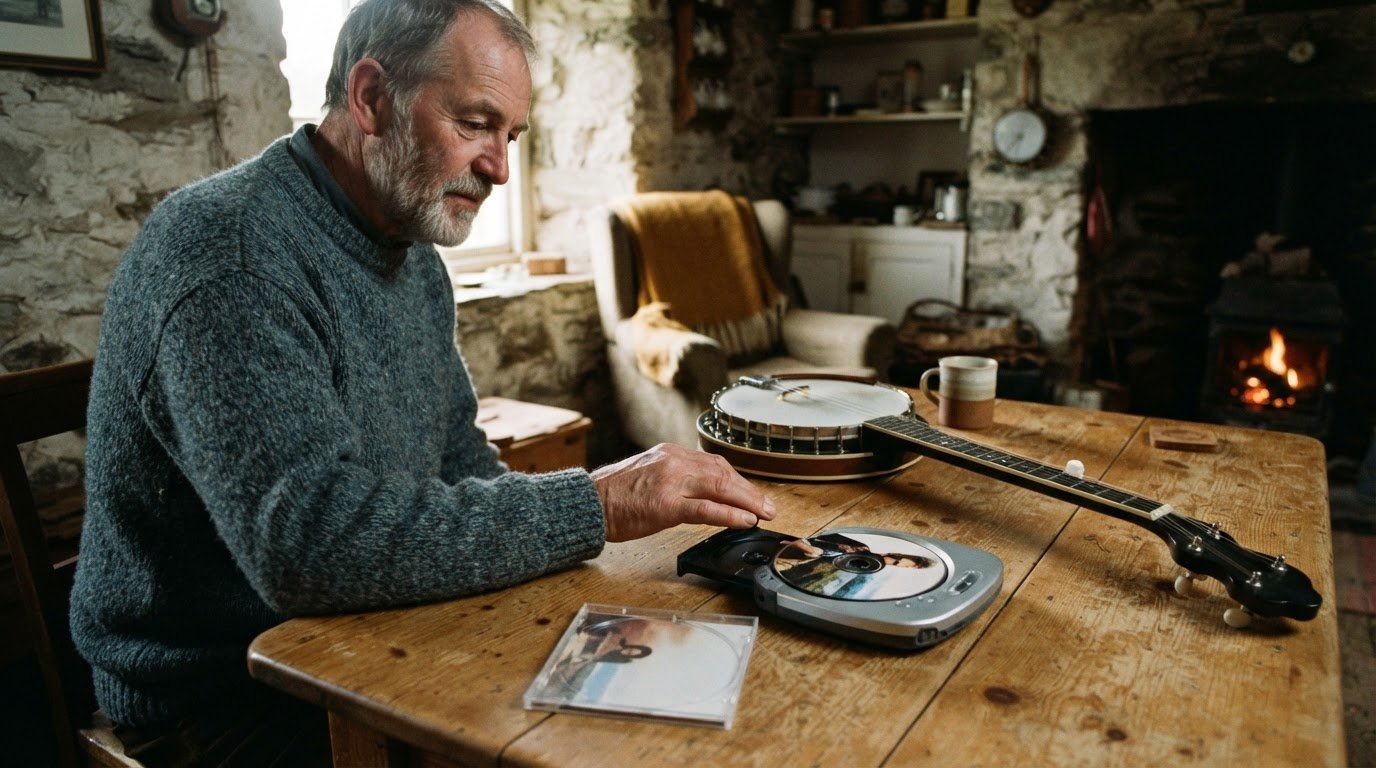
Páraic Banjo’s Not Before Time - 39 Years in the Making offers a close-up listen to traditional Irish session music, a natural next step after exploring the bands and sounds in this guide. Its 18 tracks were recorded live with expert musicians, bringing the energy of shared playing into the album.
Choose the Physical CD for a physical copy, the Digital Album for a digital listen, or Individual Digital Tracks to pick out particular tunes. The performances let you focus on the rhythmic, soulful tenor banjo style and hear how it fits within an ensemble.
For a deeper listen to Irish session music, visit Páraic Banjo.
Keep the Listening Going
Make your next listening session more deliberate. Choose one tune, play it once for the melody, then listen again for the rhythm and the way the instruments answer one another. That small shift can reveal details that get lost when music becomes background sound. Note the moments that catch your ear, whether it’s a striking phrase, a change in pace, or the warmth of a particular instrument.
Exploring modern traditional Irish bands is less about finding one definitive sound and more about following your curiosity. Let one recording lead you to another, and give unfamiliar arrangements room to grow on you. A tune can feel different each time you return to it.
If you’d like to continue that journey with a musician rooted in Irish trad, connect with Páraic Banjo about Irish trad. Keep listening, stay curious, and enjoy where the music takes you.
Frequently Asked Questions
What are the best modern Irish folk bands?
Ye Vagabonds and John Francis Flynn are strong starting points for modern Irish folk. To find which suits you, listen to one song from each without multitasking, then replay the one that stays with you. Notice whether you’re drawn to the tune, lyrics, or vocal delivery. Use that preference to choose your next artist instead of relying on a fixed “best” list.
What are the best modern traditional Irish bands today?
For a varied listening queue, try Ye Vagabonds, Lúnasa, and Róis. No single ranking captures every listener’s taste, so treat those names as a starting point. Pick a track from each, save the one you most want to hear again, and follow that artist’s releases. This creates a personal shortlist based on your own listening, not someone else’s definition of “best.”
Which contemporary Irish bands blend traditional folk music with rock or pop?
Moving Hearts, Stockton’s Wing, and Beoga are useful names to explore for music that connects Irish tradition with broader popular styles. To compare them, choose one track from each group and listen for how the rhythm, song structure, and instrumental arrangement shape the overall feel. Write down one detail you notice in each recording. That quick comparison can help you find the balance of folk and contemporary sound you enjoy.
Which modern Irish bands use traditional instruments such as fiddle, bodhrán, and uilleann pipes?
Traditional instruments appear across Irish groups, but the exact lineup can differ between recordings. Check album or track credits for named players and instruments, then listen again with those details in mind. For a focused comparison, choose recordings that credit different lead instruments. You’ll hear more clearly how the lineup changes a tune’s character, even when the musical tradition remains familiar.
How do modern Irish traditional bands compare in sound and style?
Compare bands through three simple listening cues: whether the music is vocal or instrumental, how prominent the rhythm feels, and how the arrangement develops. Choose one song from each group and note what grabs your attention first. Then listen again for a detail you missed. This makes it easier to describe your preferences and find other artists with a similar approach.
What are the best modern Irish traditional bands for live concerts or festivals?
Choose a concert playlist based on the mood you want, such as energetic tunes, reflective songs, or a mix. Before attending a festival, browse its artist lineup and sample a track from unfamiliar names. Save a few discoveries to revisit later. This gives you a listening plan while leaving room for a spontaneous set that catches your attention on the day.
Which newer Irish traditional bands are worth discovering?
Try Madra Salach, Róis, and The Southern Fold when you’re ready to explore beyond familiar names. Choose one recording from each and jot down the instruments or musical details you recognize. Then replay your favorite and look up the track credits to learn more about the performers. This simple routine turns a first listen into a path toward discovering artists and recordings you might otherwise miss.
Comments