Gift for Someone Learning Banjo: Picks for Every Budget

The best gift for someone learning banjo doesn’t have to be the instrument itself. Picks, a tuner, a comfortable strap, or a beginner songbook can make practice more enjoyable. A first banjo can also be a memorable choice when you know they’re ready for one.
It’s easy to focus on a big purchase, but small, useful gifts can be just as welcome, especially when they support the player’s interests and next steps. This guide offers thoughtful ideas for different budgets, from handy accessories and music-inspired keepsakes to a banjo for a new player. You’ll also find simple ways to choose a personal gift that brings more music into their hands.
Table of Contents
1. Gifts for banjo players and music fans
A good gift can support practice or celebrate the music around the instrument. For a beginner, consider their playing setup, favorite songs, and interest in banjo history. A strap, stand, case, or songbook each serves a different purpose. Choose one that fits how they spend time with music.
In the United States, local music stores that carry stringed instruments and online instrument retailers are places to look for beginner banjo gifts. They offer practical accessories such as straps and stands, as well as beginner songbooks. For a music fan who doesn’t need gear, consider a banjo-themed keepsake or a recording they’ll enjoy listening to.
A strap supports the banjo while the player practices standing, making it a thoughtful gift for someone who enjoys playing on their feet. A stand gives the instrument a place to rest between sessions, rather than leaving it on a chair or leaning it against furniture. Before choosing either, consider where the beginner practices and whether they usually sit or stand.
A sturdy case or gig bag is useful for a player who takes their banjo to lessons, rehearsals, or visits with friends. A case provides a dedicated way to carry and store the instrument, while a gig bag is a softer alternative. Think about how the player travels and where they keep their banjo. Those details can guide your choice.
For someone eager to learn tunes, a beginner songbook or banjo tablature can give practice a clear direction. Tablature is a written guide showing where to place fingers on the strings. Choose material that suits the player’s musical interests, such as traditional tunes or bluegrass. A familiar melody can make learning a new technique more rewarding.
Music fans may enjoy a gift that connects the banjo to a memorable recording or story. Steve Martin’s album The Crow: New Songs for the 5-String Banjo won the Grammy Award for Best Bluegrass Album in 2009. “Dueling Banjos,” originally called “Feudin’ Banjos,” appeared in The Andy Griffith Show in 1963 and the film Deliverance in 1972. Those names offer useful starting points for a listening gift.
To choose a fitting present, decide whether the recipient needs support for practice, storage, new music, or a nod to banjo culture. A strap suits standing practice; a case suits travel; a songbook suits a beginner ready to explore tunes. Match the gift to one clear interest, and it’s more likely to become part of their musical routine.
2. Small banjo accessories and stocking stuffers
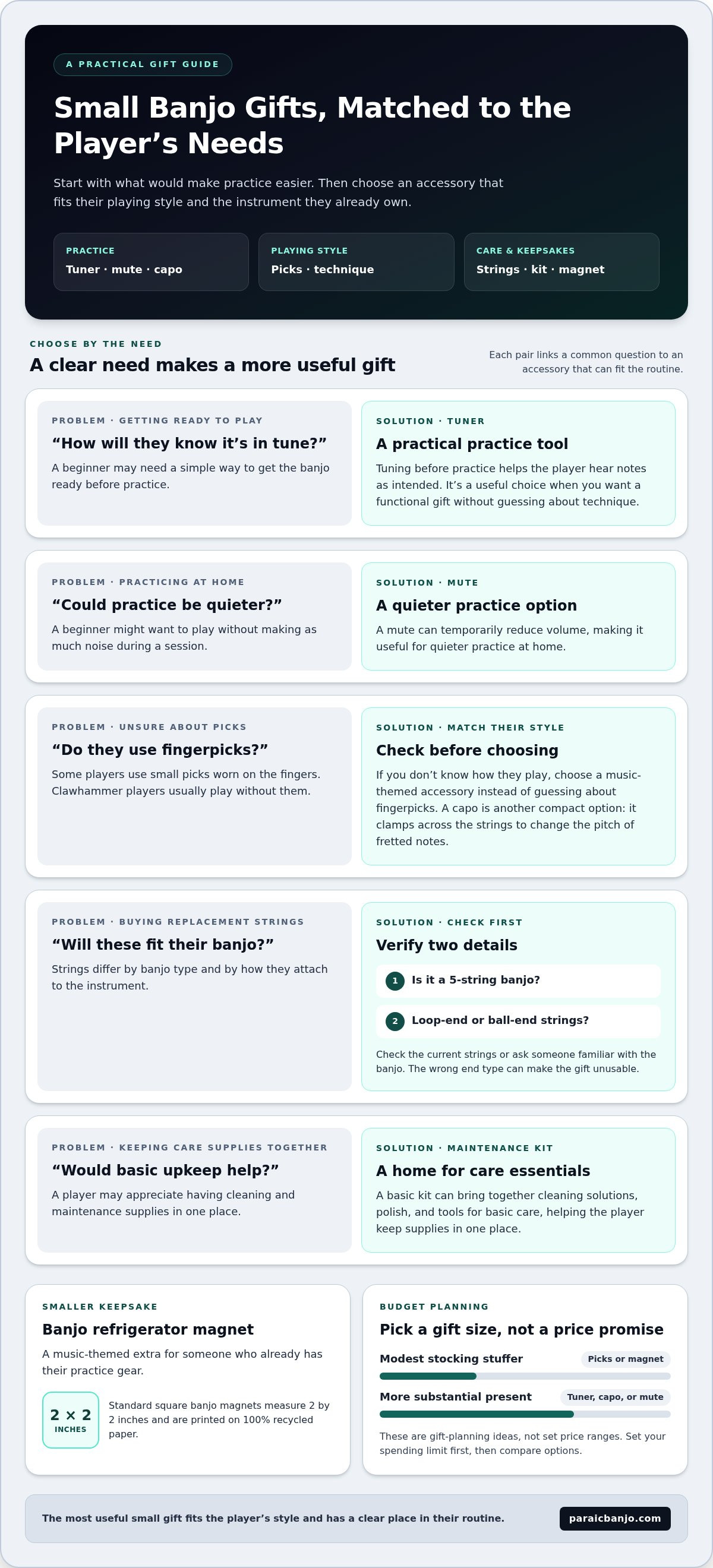
Small accessories can make practice easier without requiring you to choose a first instrument. Useful options include picks, a capo, a tuner, strings, a mute, or a basic maintenance kit. For a music-themed extra, consider a banjo refrigerator magnet. Match the gift to what the player already uses instead of buying unfamiliar gear.
Picks or a magnet suit a modest stocking stuffer; a tuner, capo, or mute can make a more substantial present. These are budget-planning ideas, not promises that every item falls under a particular price. Set your spending limit first, then compare options.
Picks need a little thought. Some players use fingerpicks, small picks worn on the fingers, while clawhammer players usually play without them. If you don’t know their style, a music-themed accessory avoids guessing about technique. A capo is another compact choice: it clamps across the strings to change the pitch of the notes the player frets.
A tuner gives a beginner a practical tool for getting the banjo ready to play. Tuning before practice helps the player hear notes as intended, rather than learning on an instrument that sounds off. A mute can temporarily reduce volume, making it useful when a beginner wants a quieter practice session at home. Neither accessory replaces the player’s own routine, but both can support it.
Strings are useful, but choose them carefully. First find out whether the instrument is a 5-string banjo, then determine whether it takes loop-end or ball-end strings. Those terms describe how the string attaches to the instrument. Buying the wrong end type can make a well-meant present unusable, so check the current strings or ask someone familiar with that banjo before choosing.
A maintenance kit can bring together cleaning solutions, polish, and tools for basic care. The player can use it to keep supplies in one place and build a simple upkeep routine. For a smaller keepsake, standard square banjo refrigerator magnets measure 2 by 2 inches; banjo magnets are printed on 100% recycled paper. That makes one an easy-to-wrap choice for a player who already has their practice gear.
To choose well, identify one current need: quieter practice, tuning, string replacement, or basic cleaning. If the player is a clawhammer beginner, skip fingerpicks unless you know they want them. If you’re unsure about strings, choose a tuner or magnet instead. A compact gift works best when it fits the player’s style and has a clear place in their routine.
3. Choosing a first banjo
A first banjo is a substantial present, so make the decision with the learner rather than guessing in secret. Ask what they hope to get from owning one, and agree on a spending limit before looking at instruments. A market snapshot collected October 22, 2026, puts 5-string banjos typically between $637 and $2,100 USD, with a median of about $749. Treat that range as a comparison point, not a guarantee of quality.
Let the beginner handle the instruments they’re considering. Ask them to notice whether the neck feels comfortable in their hand and whether they can reach the fingerboard without strain. The fingerboard is the playing surface along the neck. A brief tryout can reveal preferences that photos and descriptions can’t, and gives the learner a say in a gift they may use for years.
Listen together, too. Compare a few recordings of the same kind of tune, then ask which banjo sound the player enjoys. Focus on qualities they can describe, such as a sharper or rounder tone, rather than technical terms. Their reaction can guide the choice without turning the gift into a test of musical knowledge.
If you’re comparing instruments in person, look closely at the finish and moving parts. Check for visible cracks, loose hardware, or strings that sit unevenly above the fingerboard. A string’s height above the fingerboard affects how the instrument feels to play. Ask for a demonstration of the banjo being played, then listen for notes that sound clear and consistent.
For a used instrument, ask about its playing history and any repairs. The seller’s account can help you understand its condition, while a knowledgeable player can offer a useful second opinion. Don’t treat a polished appearance as proof that an instrument plays well. Prioritize a comfortable playing feel and a sound the beginner wants to hear again.
Keep the gift flexible if the learner hasn’t formed preferences yet. You might present a written promise to choose the banjo together, or make the search itself part of the celebration. That approach lets the beginner compare options at their own pace and prevents a surprise purchase from setting the direction for them.
Before deciding, write down the learner’s budget, playing priorities, and impressions from trying instruments. Compare each candidate with those notes, rather than choosing by decoration or the largest discount. The best first banjo is the one the player wants to pick up and make music on.
5. Are banjo gift cards for lessons or music stores a good option?
Either can work, but the best fit depends on what will encourage the beginner to keep exploring. Choose a lesson gift card if they enjoy structured guidance and would welcome feedback on their playing. Choose a music-store gift card if they prefer browsing and making independent choices. Consider how they approach other new skills: do they seek coaching or enjoy figuring things out themselves?
For a young beginner, consider whether formal lessons sound appealing to them and their family. According to the U.S. Consumer Product Safety Commission, children ages 6 through 8 show interest in formal music lessons, making a lesson gift card a possible option for a young beginner. A parent or caregiver can help decide whether scheduled instruction fits the child’s routine and enthusiasm.
Notice how the recipient talks about learning. Someone who asks for feedback after playing a tune may enjoy lessons. Someone who likes exploring music at their own pace may appreciate choosing their next step independently. These are useful clues, not rules. If you’re unsure, a music-store card can avoid making lessons feel like an expectation.
Think about the occasion, too. A lesson card can mark a commitment to learning, such as a birthday gift for someone who has already said they want instruction. A store card may suit a holiday when you’d rather leave the musical choice open. In either case, a short note can explain why you chose it without setting a deadline for progress.
Consider how the gift will fit into the beginner’s life. A regular weekly schedule may suit someone who likes a planned routine, while a busy student may value flexibility. For a child, include the caregiver in the decision. For an adult, a casual conversation about their preferred learning pace can guide your choice without spoiling the surprise entirely.
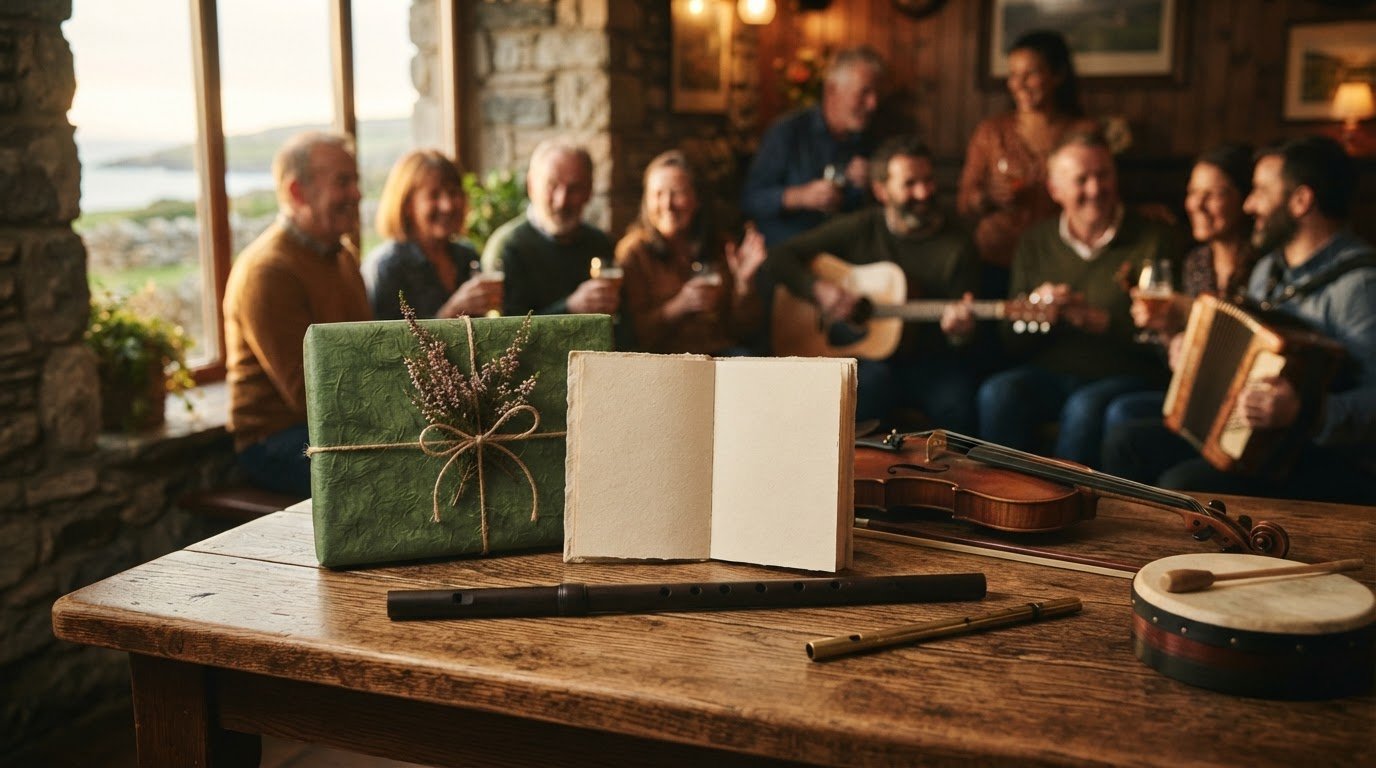
You can make a gift card feel more personal through the way you present it. Pair it with a handwritten message about a tune or musical moment you hope they’ll enjoy. Keep the wording encouraging, not demanding. The gift should celebrate their interest, not turn practice into an obligation.
Choose lessons for a learner who welcomes coaching, and a store card for someone who prefers choosing independently. If both options sound appealing, let the recipient decide which feels right. That small choice gives the beginner ownership of the next step and keeps the present connected to the music they want to make.
5. What should you avoid buying for someone who is learning banjo?
Avoid gifts that turn a new hobby into a deadline. A practice challenge promising daily progress, or a surprise performance booked for a family gathering, can make learning feel like an obligation. Instead, keep the gift focused on enjoyment and let the beginner decide when they’re ready to play for others. A relaxed invitation to share a tune is kinder than setting a date.
Be wary of technical adjustment tools presented as beginner essentials. A wrench for changing an instrument’s setup, for example, can create confusion if the recipient doesn’t know what needs adjusting. Since setup affects how a banjo plays, a tool without clear guidance may feel more like a chore than a present. Choose something the learner can enjoy without first needing to diagnose or alter their instrument.
Skip gifts that quietly create an ongoing commitment. A music app or subscription may require an account, recurring payments, or regular use after the initial gift. That can be a poor fit for someone still exploring whether they enjoy structured digital learning. If you’re considering a digital resource, make sure its format and ongoing requirements suit the recipient’s habits.
Avoid buying an elaborate gift package simply because it looks complete. Several items may duplicate what the beginner already owns, while one specialized piece may require extra setup. Before choosing a bundle, review its contents and consider whether each item has a clear purpose for this particular learner. A smaller, well-matched present is more useful than a box of gear that stays unopened.
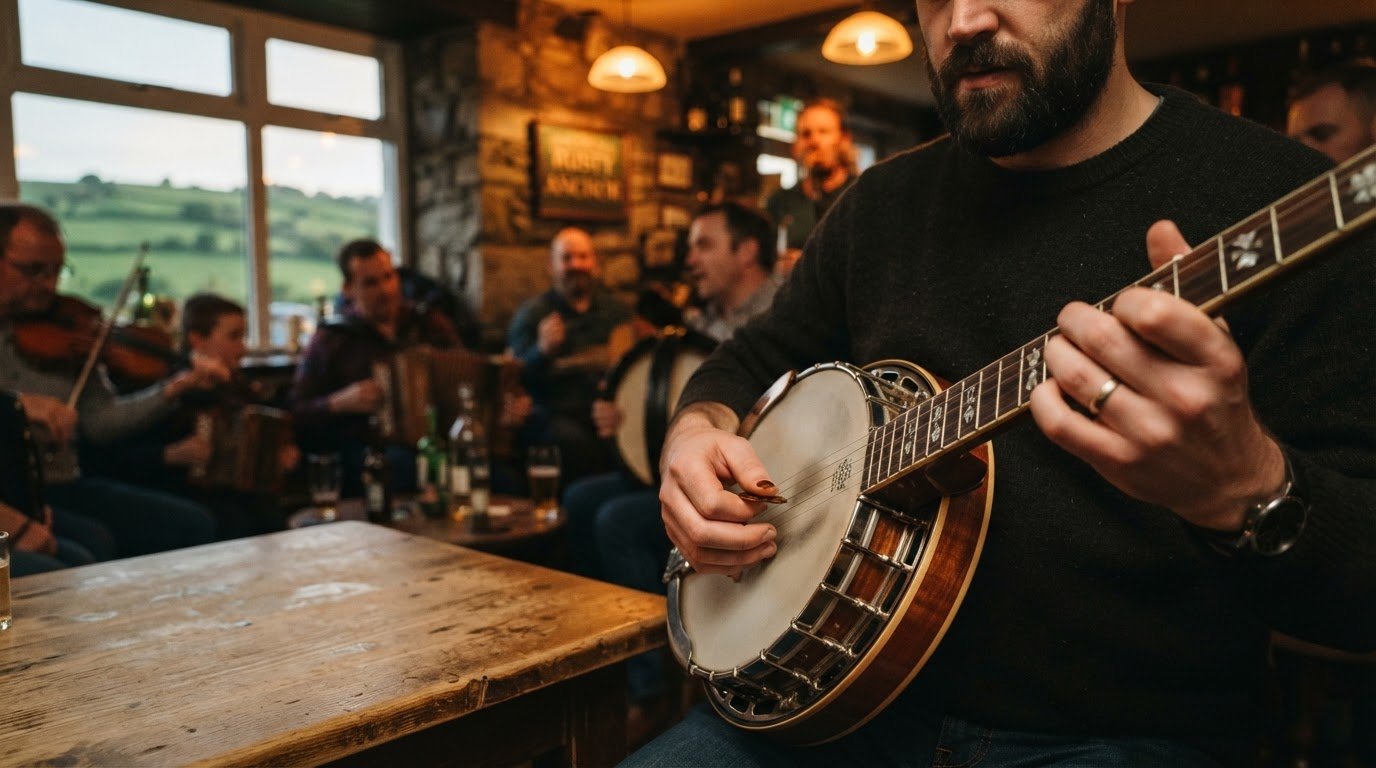
Don’t confuse listening inspiration with instruction. A recording can introduce a beginner to the sound and feel of banjo music, but it won’t explain finger placement or practice technique. If a music-centered present is the goal, traditional Irish banjo music can be a thoughtful listening choice. Pair it with a note encouraging the learner to enjoy the tunes, without suggesting they should already be able to play them.
Also avoid presents that put the beginner on the spot. A novelty gift tied to an announced performance, for instance, can create pressure before the player has found their footing. Keep the recipient’s comfort in mind, especially if they’re private about learning. A gift should welcome them into the music, not make their progress a public event.
Before buying, ask yourself whether the gift adds pressure, requires technical knowledge, or creates an ongoing obligation. If it does, choose a simpler alternative that the learner can enjoy on their own terms. That small pause can help you give encouragement, not homework.
Páraic Banjo: Not Before Time - 39 Years in the Making (Physical CD)
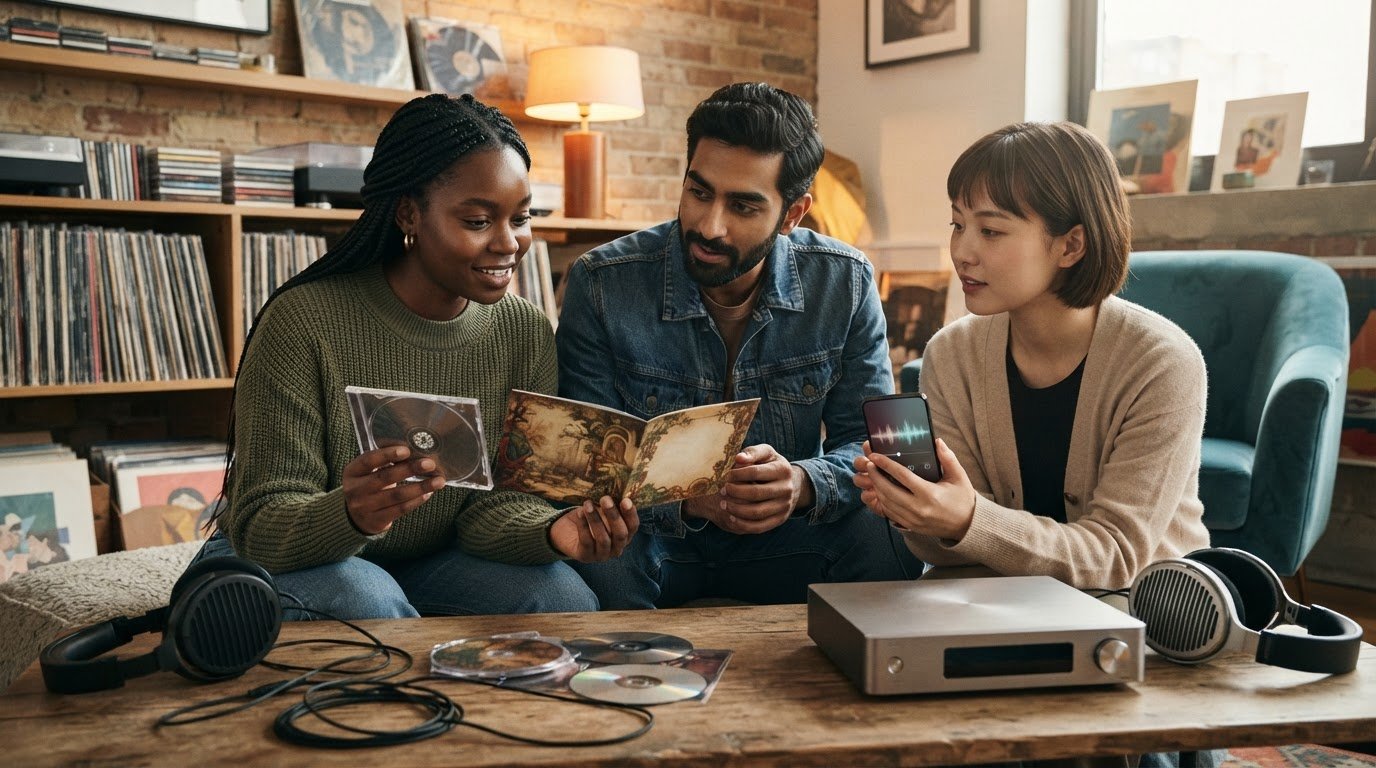
Páraic Banjo’s Not Before Time - 39 Years in the Making is a music-inspired gift for a beginner curious about traditional Irish session playing. The album features 18 tracks recorded live with expert musicians, offering a chance to hear the banjo in lively musical company. Choose the physical CD for a tangible present, the digital album for a download, or individual digital tracks when you want to select particular tunes.
It’s a natural choice when the learner already has practice essentials and would enjoy discovering the sound, rhythm, and energy of Irish banjo music. The tracks can add inspiration between practice sessions without pretending to replace hands-on learning. For a music-loving beginner, that’s a gift rooted in the tradition they’re exploring.
Visit paraicbanjo.com to explore the album.
Make the gift part of their musical journey
A present can do more than fill a gap in a beginner’s kit. It can show that you’re cheering on the time and curiosity they’re bringing to the banjo. Add a short note inviting them to share a tune they’re working on, or make listening together part of the gift. That personal touch can turn a music-inspired present into a moment you both remember.
If you’re still deciding, think about what would make the recipient feel encouraged to keep exploring. A gift for someone learning banjo can support their own path without setting expectations about how quickly they should progress. Páraic Banjo offers Not Before Time - 39 Years in the Making as a physical CD or digital album, along with individual digital tracks for a more tailored musical present.
Explore Páraic Banjo’s music and choose a present that keeps the music close. Here’s to the next tune, and many more after it.
Frequently Asked Questions
What is a good gift for a beginner banjo player?
A thoughtful gift for someone learning banjo could be a practice notebook tailored to their first tunes. Leave space for song names, chord changes, and questions to bring to a lesson. Add a note inviting them to write down a small win after each practice session. It’s personal, doesn’t depend on knowing their instrument’s setup, and can become a record of their progress.
What are the best gifts for someone learning banjo?
The best choice reflects what excites the beginner beyond simply owning an instrument. Ask which musician, tune, or banjo sound first caught their attention, then shape the present around that answer. For example, pair a handwritten note about a favorite tune with a listening suggestion or a small music-themed keepsake. That personal connection can make a simple present feel chosen specifically for them.
What banjo accessories are most useful for beginners?
Useful accessories depend on what the beginner already has and how they practice. Before buying, discreetly note the brand and model printed inside or on the instrument, then use that information to narrow compatibility questions for items such as replacement parts. If you can’t identify the banjo, choose an accessory that doesn’t need to fit, such as a notebook for practice notes.
Which beginner banjo method books or online lessons make good gifts?
Choose a method that introduces one skill at a time and clearly explains its notation. A useful book should let a beginner find a first tune without needing to decode unexplained symbols. For online lessons, look for instruction that includes opportunities to hear and receive feedback on playing. A thoughtful gift note can suggest a goal, such as learning a melody, while leaving the learner free to set their pace.
What banjo sizes and styles suit a beginner?
Start with the sound and playing style the beginner wants to explore, then consider how comfortably they can hold the instrument and reach its strings. A five-string banjo is commonly associated with bluegrass and clawhammer, while tenor banjo is a familiar choice in Irish traditional music. These are useful starting points, not rigid rules. Let the learner try the instrument when possible.
Comments