How to Host an Irish Music Listening Party at Home

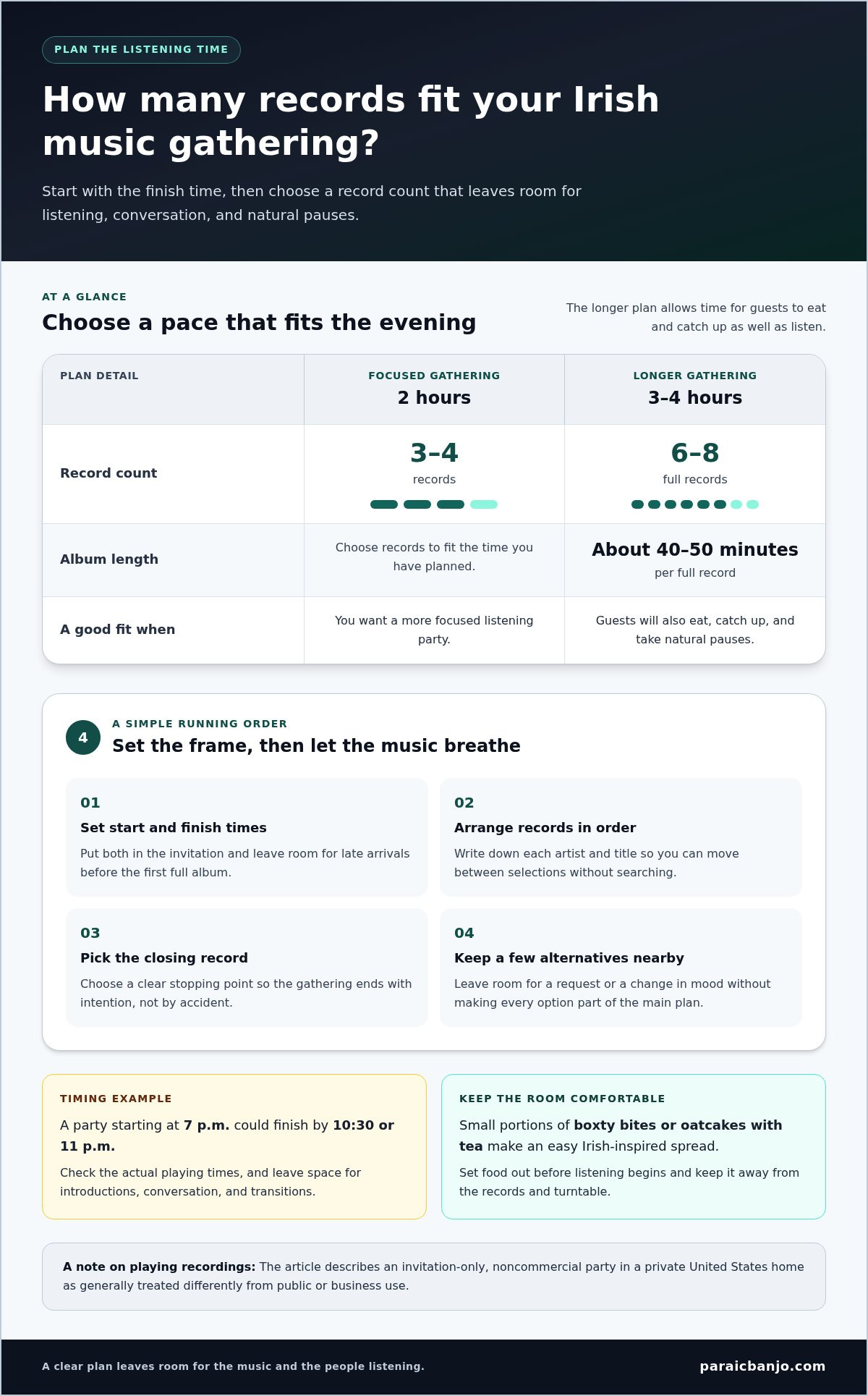
A memorable Irish music listening party doesn’t need an endless stack of records: plan three to four for a two-hour gathering, or six to eight for a three-to-four-hour one. If you’re learning how to host an Irish music listening party, start with tunes guests may recognize, then make room for new discoveries and conversation.
It’s easy to assume the music will take care of everything. A little planning helps the evening feel welcoming, especially when guests have different levels of familiarity with Irish traditional music. This guide covers how to choose familiar tunes, set a comfortable party length, select recordings, and introduce each album without interrupting the listening. You’ll also find practical ways to welcome newcomers and choose a theme that gives the evening a natural thread. Keep the plan simple, leave space to listen and talk, and let the music lead.
Table of Contents
Choosing tunes other people know
Start your playlist with a few melodies guests may recognize, then build toward less familiar recordings. In an Irish music session, choosing tunes other participants know can help people play together. At a listening party, familiar melodies offer an easy point of connection, even when guests aren’t musicians. Think of the tune list as a welcome mat, not a test of anyone’s knowledge.
Use this simple sequence to shape the music for your evening:
Ask guests what they know. Invite them to name an Irish tune, instrument, or recording they enjoy. A specific answer, such as “I like fiddle tunes,” gives you a useful starting point.
Choose recognizable opening tracks. Pick melodies with clear, repeated phrases that listeners can follow after hearing them once. A jig or reel can offer a lively introduction, while a slower air creates a gentler change of pace.
Add new material beside familiar selections. Pair a known tune with a different performance or arrangement. Listeners can compare the pace, ornamentation, or lead instrument without needing specialist knowledge.
Share the running list beforehand. When several attendees are new to sessions, a shared tune list gives them a chance to explore the names in advance.
One group organizing an Irish music session prepared around 30 Irish tunes. That’s a useful example of planning a broad repertoire, not a required playlist size for a home gathering. For your party, choose a manageable set that fits the time you’ve planned, and mark the tracks guests already recognize. The contrast between those selections and unfamiliar ones can guide the flow.
Keep titles accurate. Irish tunes can share similar names, and recordings may use different titles or arrangements. Write down the performer and track title beside each selection. If you’re sharing a playlist, include those details so guests can find the same recording and recognize the version you’ll play.
Leave space for requests, too. A guest might remember a melody but not its name; ask what instrument or moment stands out, then see whether it fits your list. If nobody recognizes a tune, introduce it with one simple listening cue, such as “listen for the fiddle answering the melody.” That small prompt turns unfamiliar music into an invitation. Build your list around sharing, and the evening can move naturally from recognition to discovery, just as tunes do in sessions across Ireland.
If many attendees are new to the session, share a tune list ahead of time as a gentle invitation, not homework. Guests can look over the titles, notice which melodies feel familiar, and arrive with a question or preference. Keep the emphasis on joining in, not proving that anyone has prepared.
At the gathering, keep the list flexible. Use it to make familiar choices easy to find, while leaving room to follow the group’s interest. A participant who knows a tune can help others settle into it; someone who is still listening can simply enjoy hearing it take shape. Preparation supports shared attention without turning the evening into a lesson.
Recommended party length and record count
For a two-hour vinyl listening party, plan three to four records. For a three-to-four-hour gathering, prepare six to eight full records, each roughly 40 to 50 minutes long. That leaves space for introductions, conversation, and the natural pauses that make a home gathering feel social. If you’re deciding how to host an Irish music listening party, begin with the finish time, then choose records that fit the evening.
For an invitation-only, noncommercial party in a private United States home, playing recordings for guests is generally treated differently from public or business use. The key distinction is whether music is played privately or as part of a public or commercial event.
Choose the shorter plan for focused listening, or the longer one when guests will also eat and catch up. A party starting at 7 p.m. could finish by 10:30 or 11 p.m. Include the expected finish in your invitation so guests can plan their evening. Then decide whether music begins as people arrive or after everyone has settled in.
Use this sequence to make the running order easy to manage:
Set the start and finish. Put both times in the invitation, and leave a little room for late arrivals before the first full album.
Arrange the records. Place them in order and write down the artist and title, so you can move between selections without searching.
Mark a stopping point. Decide which record will close the gathering, rather than letting the final selection feel accidental.
Prepare a flexible queue. Keep a few alternatives nearby for a request or a shift in mood, but don’t let every option become part of the main plan.
For easy Irish-inspired food, serve small portions of boxty bites or oatcakes with tea, so guests can help themselves without a formal meal. Put the food out before listening begins, and keep it away from the records and turntable.
Think of the timetable as a frame, not a strict program. Traditional music can prompt stories and questions, so allow a natural pause when a tune sparks conversation. If guests want to compare two performances, give that moment room instead of rushing to the next selection. A clear end time keeps the evening comfortable for both host and guests.
Before the gathering, check the running order against the actual playing times of your records. A sleeve’s listed duration may not reflect how long guests will spend listening, talking, and moving between albums. Keep the final selection easy to reach, and you’ll be ready to end on a tune that feels like a proper close.
Creating a welcoming atmosphere for newcomers
A welcoming music gathering gives newcomers clear ways to join in, listen, or simply enjoy the playing. At home, thoughtful details and respectful choices can help everyone feel included.
Budget-Friendly Pub Atmosphere
For an Irish pub atmosphere on a budget, use warm lamps, clear a few chairs, and set out simple snacks. A handwritten running order and traditional Irish music create a gathering place without costly decorations. Keep the listening area comfortable, and leave space for conversation between tracks. Focus on hospitality, not recreating a pub interior.
Respectful Cultural Presentation
Host respectfully by centering Irish traditional music and its musicians, rather than relying on caricatures or costume props. Introduce performers or instruments accurately, and avoid treating one playlist as the whole of Ireland’s musical culture. Invite guests to listen, sing, or contribute in their own way. Clear expectations should support comfort, not exclude newcomers.
Make the welcome practical. Greet each guest at the door, point out where coats and refreshments go, and explain how the evening will flow. If someone doesn’t recognize a tune, offer a listening cue, such as following the fiddle’s melody or noticing a change in rhythm. A small invitation is easier to accept than a demand to perform.
Playing isn’t the only way to take part in a music gathering. Listeners contribute by giving the musicians their attention, while some guests may prefer conversation with friends. Let everyone know both are welcome. If singing is part of the evening, invite guests to join rather than putting anyone on the spot.
Agree on a few simple ground rules before the music starts. For example, ask guests to keep conversations low during a song, then leave time to chat afterward. At Starry Plough sessions, listeners are welcome, and quiet is expected during singer sets. That example shows how a clear expectation can protect the music while helping newcomers understand what to do.
Make room for different comfort levels. One guest may want to name a tune, another may sing, and someone else may prefer to listen quietly. Offer options without asking anyone to explain their choice. If a newcomer wants to start a tune or share a song, welcome the contribution and give the group time to follow.
Before guests arrive, check the seating, sound level, and access to refreshments. A chair near the music suits someone who wants to listen closely; a quieter spot helps a guest who prefers conversation. These simple choices can make an Irish music evening feel warm, considered, and open to everyone.
Invite newcomers to start tunes, sing, or contribute in another way. The context of an Irish music session can shape the atmosphere and experience, while clear rules can help participants feel comfortable without excluding anyone.
Hosting and introducing albums
A vinyl listening party works well with four to eight people, leaving room for everyone to hear the music and share a thought. Before guests arrive, put the records in playing order and check each sleeve for the correct disc. Keep the listening area clear, and place record notes where you can reach them easily.
For an album-led gathering, choose LPs rather than 45s, except when the theme focuses on singles. An LP lets guests follow a longer musical arc, while a 45 can spotlight one performance. Tell guests what to expect: full albums, selected tracks, or a mix. That simple detail helps everyone settle into the evening.
Keep each album introduction to 30 to 60 seconds. Name the artist and album, then offer one detail that can guide the listening. You might point out a lead instrument, a change in rhythm, or how one tune moves into the next. Avoid a long biography. A clear cue gives newcomers something to notice, while experienced listeners can bring their own attention to the recording.
Try this brief introduction structure:
Identify the recording. Give the artist and album title so guests can connect the sound with its sleeve.
Share one useful detail. Mention a performer, instrument, or feature of the arrangement.
Offer a listening prompt. Suggest a sound to follow, then let the record play without interruption.
Invite a response afterward. Ask what stood out, while making it comfortable to simply listen.
Etiquette matters, even when the gathering is relaxed. Agree on whether conversation can continue quietly during a record or should wait until it ends. Traditional music sessions can involve musicians joining tunes they know, but a listening party follows the host’s stated expectations. Keep comments between tracks if the group wants focused listening, and don’t treat anyone’s knowledge of tune names as a measure of their appreciation.
A festival-inspired theme can give your introductions a useful thread. Mention what listeners might notice about the performance, such as the contrast between a driving dance tune and a slower air. Keep the context specific, and leave room for guests to describe what they hear in their own words. The host’s role is to open the door, not deliver a lecture.
After a record ends, leave the sleeve and track list visible while guests talk. Their comments can shape what you choose next, whether they’re curious about a particular instrument or want to hear another style of playing. A thoughtful introduction, clear expectations, and space to respond make the album feel shared rather than simply hosted.
Listening-party theme ideas
A theme gives your playlist, room, and conversation a shared thread. Choose one musical idea, then let the records and guests bring it to life.
Decorations and Costs
Popular Irish-inspired decorations include harp motifs, green table accents, and simple printed tune lists. Ireland’s national symbol is the Irish harp, so it offers a meaningful visual cue without relying on costume props. Keep spending manageable by using decorations you already own, then add one reusable detail, such as a harp illustration or green cloth.
Decoration costs depend on the materials, quantity, and whether you reuse them. Set a spending limit before shopping, compare a printed centerpiece with a reusable cloth, and skip disposable items that add little to the listening experience.
Activities and Party Games
Choose activities that keep music central and don’t require guests to perform. Try a “name that instrument” round using a short excerpt, or invite guests to guess whether fiddle, flute, or banjo leads a tune. For a quieter option, ask guests to write down one detail they noticed, then share their answers during a break.
Make every game optional, so conversation and focused listening remain welcome. Don’t turn unfamiliar tune titles or Irish-language words into a test; offer context instead.
Build the theme around a listening journey, not decorations alone. For example, arrange records by instrument, moving from fiddle-led tunes to whistle and banjo performances. Guests can compare tone, rhythm, and ornamentation, the small flourishes musicians add to a melody. Ask one open question after each selection, such as which instrument carried the tune most clearly.
A “tune’s journey” theme can explore how a melody changes across performances. Play two versions of a familiar tune, then invite guests to notice differences in tempo or phrasing. Keep the conversation focused on what people hear, rather than expecting anyone to identify a definitive version. That approach gives newcomers an easy way into traditional music.
For a gathering with musicians, try a “sound and story” theme. Ask each player to choose a recording and share why its melody, arrangement, or performance matters to them. Listeners can contribute by describing a moment that caught their ear. The result is personal, specific, and rooted in sharing rather than broad claims about Irish culture.
Choose one theme, write it on the invitation, and select records that support it. If you’re shaping an evening around traditional Irish recordings, explore Irish music recordings for inspiration.
Páraic Banjo: Not Before Time - 39 Years in the Making (Physical CD)
Páraic Banjo’s Not Before Time - 39 Years in the Making gives your listening party a complete album of traditional Irish session music. Its 18 tracks were recorded live with expert musicians, bringing the energy and interplay of a session into your home. Choose the physical CD for a record to share around the room, or select the digital album or individual digital tracks to suit your listening plan.
It’s a natural choice when you want to introduce guests to a cohesive collection rather than assemble every selection separately. Add the album to your running order, share its title with guests, and invite them to listen for how the musicians shape each tune. Visit paraicbanjo.com to explore the music.
Let the Next Tune Lead Somewhere New
Let the gathering have a life beyond the last track. The best way to learn how to host an Irish music listening party is to notice what guests respond to, then let that shape your next musical get-together. A comment about a banjo phrase, a request to hear more whistle, or a tune someone remembers can become the thread for another evening.
Before everyone heads home, invite each guest to share one moment they’ll remember or one sound they’d like to hear again. Jot down their suggestions while they’re fresh. Later, use those notes to choose a new theme or build a playlist that reflects the people who gathered around the music. Their reactions can lead to a more personal event than any fixed formula.
Give the next gathering its own character, too. Keep what worked, change what didn’t, and let curiosity guide your choices. If you’re planning a party and want to talk about the music, contact Páraic Banjo about your party. Bring your idea, and let the next tune find its place.
Frequently Asked Questions
How do I plan an Irish music listening party step by step?
Start by choosing the mood you want guests to leave with, such as lively, reflective, or a mix. Then assign one person to manage the music and another to welcome guests or refresh snacks. Before the party, test the sound from different seats and set out a printed running order. On the day, keep the plan flexible: if a conversation takes off, pause before starting the next selection.
What Irish music genres and artists should I include in a party playlist?
Build around Irish traditional music, then vary the sound with reels, jigs, and slower airs. For a distinctive listening thread, include tenor banjo alongside fiddle, whistle, or accordion performances, and compare how different lead instruments shape a melody. Páraic Mac Donnchadha is one artist to explore; Cormac Begley, Conor Connolly, and George Grasso are also names associated with Irish traditional recordings.
How long should an Irish music party playlist be?
Make the playlist long enough to cover the listening time you’ve planned, while leaving natural space for guests to talk and move between selections. A useful approach is to organize music into clear blocks, then place a familiar or lively track near the end as a closing cue. If guests are enjoying a discussion, let the next block begin when the conversation settles rather than rushing to fill every minute.
Comments