Irish Banjo Session Etiquette for Tunes, Instruments and Session Culture

A banjo can fit an Irish session, but its sound and playing style need to suit the room. An Irish session is a shared gathering where musicians play traditional tunes together, often following the lead of whoever starts each tune. Good Irish banjo session etiquette means listening before joining, sitting out tunes you don’t know, and keeping your sound in balance with the group.
It’s natural to wonder whether your banjo will blend in or whether you should hold back until you know the tunes. The answer depends on more than the instrument: the session’s tradition, atmosphere, and available space all matter. This guide explains how to read those cues, when to join or sit out, how musicians share the lead, and what makes an instrument a comfortable fit. You’ll find practical ways to take part respectfully while keeping the lift and pleasure of playing in a circle.
Table of Contents
Balancing welcome with session leadership
A session can welcome visitors while relying on experienced players to guide the music. For a banjo player, reading that balance helps you join in without taking over.
Welcoming Visitors Across Session Traditions
Session etiquette in Ireland and the United States depends more on the particular group than on a single national rule. Expect local leadership and tune choices to vary. For example, a Tucson session takes turns around the circle starting tunes, and players are free to pass.
That difference matters when you arrive with tunes ready to play. In one session, a lead melody player may choose the next tune on the spot, so a familiar set list may not apply. In another, players may take turns starting tunes. Listen to how the group moves between tunes before assuming you should lead or follow a particular pattern.
A session host can help newcomers feel at ease by sharing a tune list or explaining how the group works. If someone says, “Let us hear you,” it may be an invitation to join, not a judgment of your playing. Take the cue warmly, then choose a tune you can play confidently at a volume that suits the circle.
Asking Before Joining In
Banjo players don’t need to ask permission before every tune, but a brief question can clarify how a particular session works. It’s especially useful when you’re new, unsure of the group’s musical focus, or wondering whether to start a tune.
Some sessions let melody players choose the next tune as the set unfolds; others make space for turns. If you’re uncertain, ask the host how tune starts work or wait for a clear invitation. If you’re not ready to play, you can listen, learn, or join when the group makes room.
Leadership means setting a sound and a standard, not simply controlling who plays. A session leader, or someone asked by the venue to lead, can shape the atmosphere and keep the music focused. Groups pursuing a particular sound may maintain musical standards so players with shared interests can enjoy the session. That needn’t prevent a friendly welcome.
Before raising a concern, consider how much it affects the music. A distracting interruption may call for a calm word; a minor difference in preference may not. Don’t record tunes without approval from session leaders: ask first, then respect the answer. These small choices balance hospitality with the leadership that helps a session’s tunes flow.
Recognising a closed or exclusionary session
A closed session limits participation by design; an exclusionary one leaves newcomers unsure whether they’re welcome. Notice what happens when a visitor arrives rather than judging the group by its volume or skill. A quiet circle can be open, while a lively one may still reserve its tunes for regular players.
Start with the invitation. A public session with a host who greets visitors, explains how tunes begin, or offers a tune list gives newcomers a clear way into the room. By contrast, a circle that ignores a polite greeting, makes no space, and continues without acknowledging a visitor sends a different signal. Look for repeated actions, not one busy moment.
Musical focus matters too. Some groups aim for a particular sound and maintain standards to support musicians who share that interest. That focus alone doesn’t make a session exclusionary. The distinction is whether players explain expectations respectfully or use them to belittle someone who hasn’t learned the group’s repertoire.
Notice how the group responds when a newcomer tries to connect. If the host offers a tune name, suggests listening, or explains where a banjo can fit, there’s a practical path to participation. If players repeatedly ignore reasonable questions or mock a visitor’s playing, take that as a clear sign to stop pressing for a place in the circle.
Separate a musical boundary from a personal slight. A leader might ask a visitor to listen during a set because its tunes move quickly or the group is keeping a particular sound. That’s different from refusing to explain any way to take part. A useful reason and a respectful tone help you understand what the session is protecting.
Use a simple check before deciding what the atmosphere means: greet the host, ask how newcomers usually join, then notice the response. A clear answer, a tune suggestion, or an invitation to listen gives you information. A dismissive reply or repeated silence does too. You don’t need to argue; choose whether to stay, listen, or find a circle better suited to your playing.
To hear how musicians shape a shared traditional sound, explore traditional Irish session music. Then bring that attentive ear into the room: welcome is shown not only through words, but through the way a group makes its expectations understandable.
Sitting out tunes you do not know
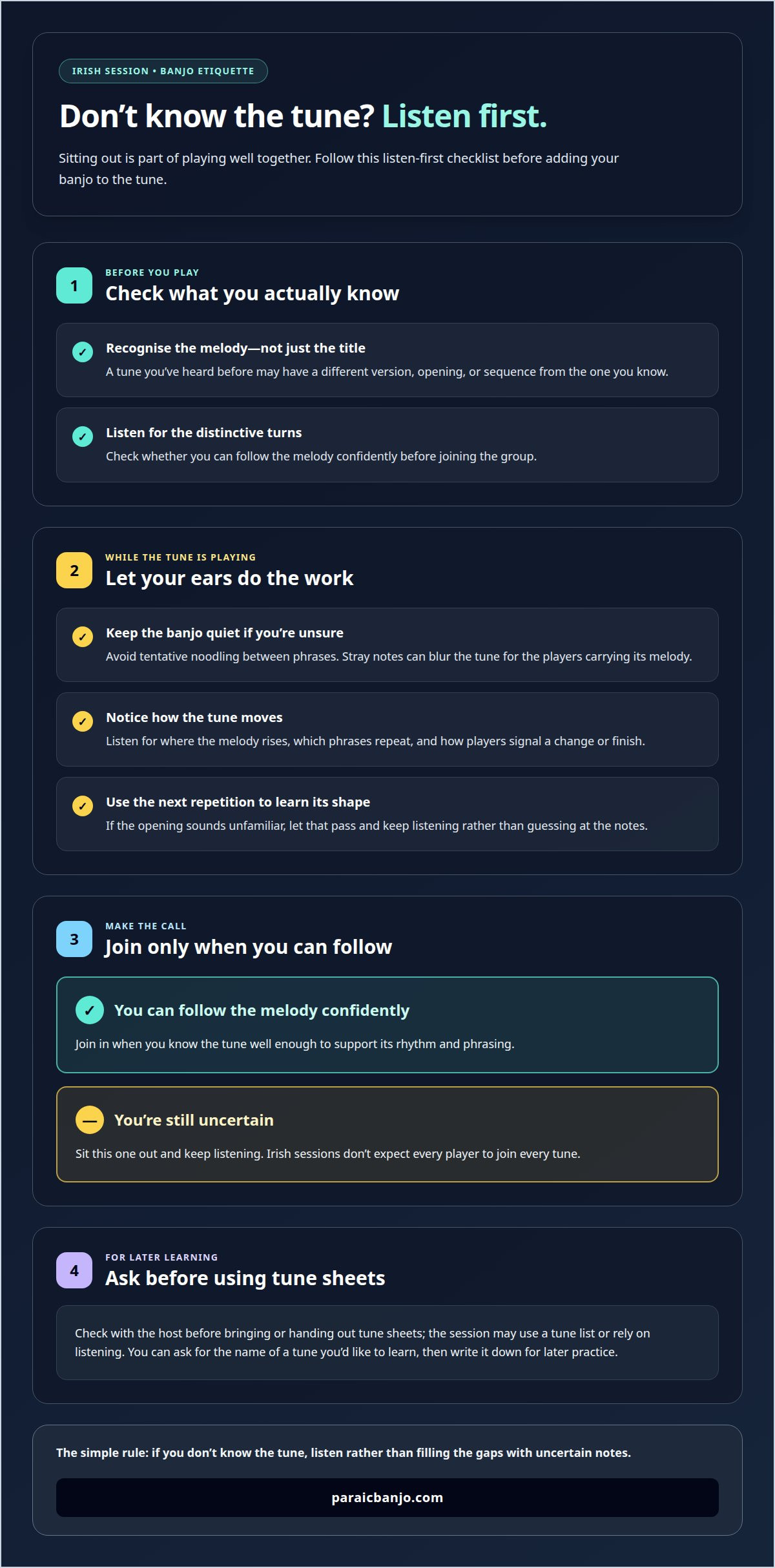
If you don’t know a tune, sit it out and listen rather than filling the gaps with uncertain notes. Irish sessions don’t expect every player to join every tune. Joining only when you know the melody helps keep the group’s rhythm and phrasing clear.
Even a familiar title isn’t always enough. A tune may have a different version, opening, or sequence from the one you know. Listen for its distinctive turns first, then decide whether you can follow the melody confidently. If the opening sounds unfamiliar, let the tune pass and use the next repetition to learn its shape.
Listening is active practice, not wasted time. Notice where the melody rises, which phrases repeat, and how players signal a change or finish. Keep your banjo quiet while you follow those details. Avoid tentative noodling between phrases: stray notes can blur the tune for players carrying its melody.
Is it appropriate to bring or request tune sheets at an Irish session? Ask the host before bringing or handing out sheets, since the session may use a tune list or rely on listening. It’s fine to ask for the name of a tune you’d like to learn, then write it down for later practice.
What Irish session tunes should a beginner banjo player learn first? Start with tunes that recur at the session you hope to join, rather than assuming one starter list suits every circle. Ask a host or experienced player for tune names, then listen closely to the group’s version before practising its melody and timing.
What mistakes or behaviors are considered rude at an Irish banjo session? Playing through a tune you don’t know, talking over the music, and tapping coins on the table can disrupt the group. These actions compete with the melody and rhythm instead of supporting them. Save conversation for breaks, and leave table percussion out unless the players welcome it.
Try a simple listening routine during a tune you haven’t learned. Follow the melody through its opening, notice which phrases return, and listen for how the set moves into the next tune. Don’t guess at chord changes or add notes to prove you’re following. Wait until you recognize the tune’s shape, then join only if your playing can support it.
If you lose the melody halfway through, stop playing and listen again. A quiet pause is better than continuing with notes that no longer fit. Between tunes, ask someone in the circle for the title or a useful recording reference. That gives you a clear starting point for learning without interrupting the tune.
When a host offers a tune list, use it as a guide, not a promise that every listed tune will be played. Mark the names you recognize and listen for them during the session. Your next step is simple: learn the tunes that return, and let the unfamiliar ones teach your ear first.
Suitability of instruments for Irish sessions
An instrument fits when its sound, volume, and role support the tunes and the players around it. Pub sessions and formal Irish trad sessions don’t follow one universal etiquette code; expectations depend on each group’s musical focus and atmosphere. Watch how musicians play, then adapt to the session rather than assuming your instrument always belongs.
For banjo players, the key is control. A Tucson session’s guidance says five-string banjos are generally not welcome because they may not suit the music or may be difficult to play softly. That is guidance for that session, not a rule for every Irish circle. Keep your attack light, listen to the other instruments, and notice whether your banjo blends with the melody.
Volume matters especially when a room is busy. Tucson session guidance asks musicians to keep loud instruments near the volume of flutes and fiddles. Aim for a clear, even sound rather than pushing above the melody. If your banjo dominates a flute line, ease your picking or sit out while the group settles into its balance.
Accompaniment needs space too. Chordal players and bodhrán players should take turns, so avoid automatically adding another layer. The Tucson guidance allows that two or three expert bodhrán players may fit, while one novice player may not. The point isn’t simply counting instruments: timing, control, and the sound already in the circle matter.
Other string instruments can suit different roles. An octave mandolin is tuned an octave below a mandolin, often to GDAE, and its short scale can work for melody. One player described using GDAD for accompaniment. If another musician already plays bouzouki, consider a different role instead of doubling the same sound.
Space is part of an instrument’s fit. At a crowded session, bringing one or two instruments keeps cases and spare gear from taking room needed by musicians. If there’s plenty of space, players may bring more; when space is tight, some tuck instruments underneath the table. Leave clear room for people to sit and move.
Tempo and style should follow the players leading each tune. There’s no single session-wide speed to impose: listen to the opening, then match its pulse, phrasing, and lift. Keep ornaments tidy and avoid changing the feel to show off. A steady banjo that supports the melody serves the tune better than louder or faster picking.
Before choosing a second instrument, consider whether it adds a useful sound or simply duplicates one already present. At a session with a bouzouki player and active chordal accompaniment, a restrained melody part may fit better. Let the room’s volume, available space, and musical texture guide your choice.
Should banjo players ask before joining an Irish session?
A banjo player doesn’t need formal permission for every tune, but asking can clarify how an open session welcomes newcomers. A brief question helps you learn whether to play melody, add chords, or listen first. Ask during a pause, not over a tune, so you don’t interrupt the music.
Keep the question specific. Try, “Would you like me to join this tune?” or “Is it better if I listen for now?” These give the players a clear choice without demanding a long explanation. If the group invites you to chord along, keep your accompaniment steady and quiet. If they suggest listening, take that as useful direction.
A newcomer who doesn’t yet know the tunes may be asked to chord along, listen, or learn before joining in. Follow the option the musicians offer. Chording isn’t a shortcut to joining every tune; it still needs to fit the melody and session sound. If you don’t know the tune or its changes, listening is the more supportive choice.
Before playing, consider whether your repertoire fits the session’s musical tradition. At an Irish traditional session, don’t launch into a tune from another tradition without an invitation. Ask the host what kind of tunes the group plays or name a tune you have in mind. That small check can prevent an awkward mismatch.
Read the response, then act on it. A tune suggestion, an invitation to join, or a request to listen gives you a clear next step. If the answer is no, don’t argue or start playing anyway. Stay attentive, enjoy the set, and ask about a tune during the next break if you want to learn it.
Good etiquette also spreads through example. Play tunes that suit the circle, give others room, and treat each musician with respect. If you see another visitor unsure what to do, a friendly explanation can help them find their place without speaking over the music. That’s how welcome becomes part of the session’s sound, not just its words.
For a listening example before your next session, explore traditional Irish banjo music. Notice how the banjo supports the tune, then bring that attentive approach to the circle: ask clearly, accept the group’s cue, and join when your playing serves the music.
Páraic Banjo
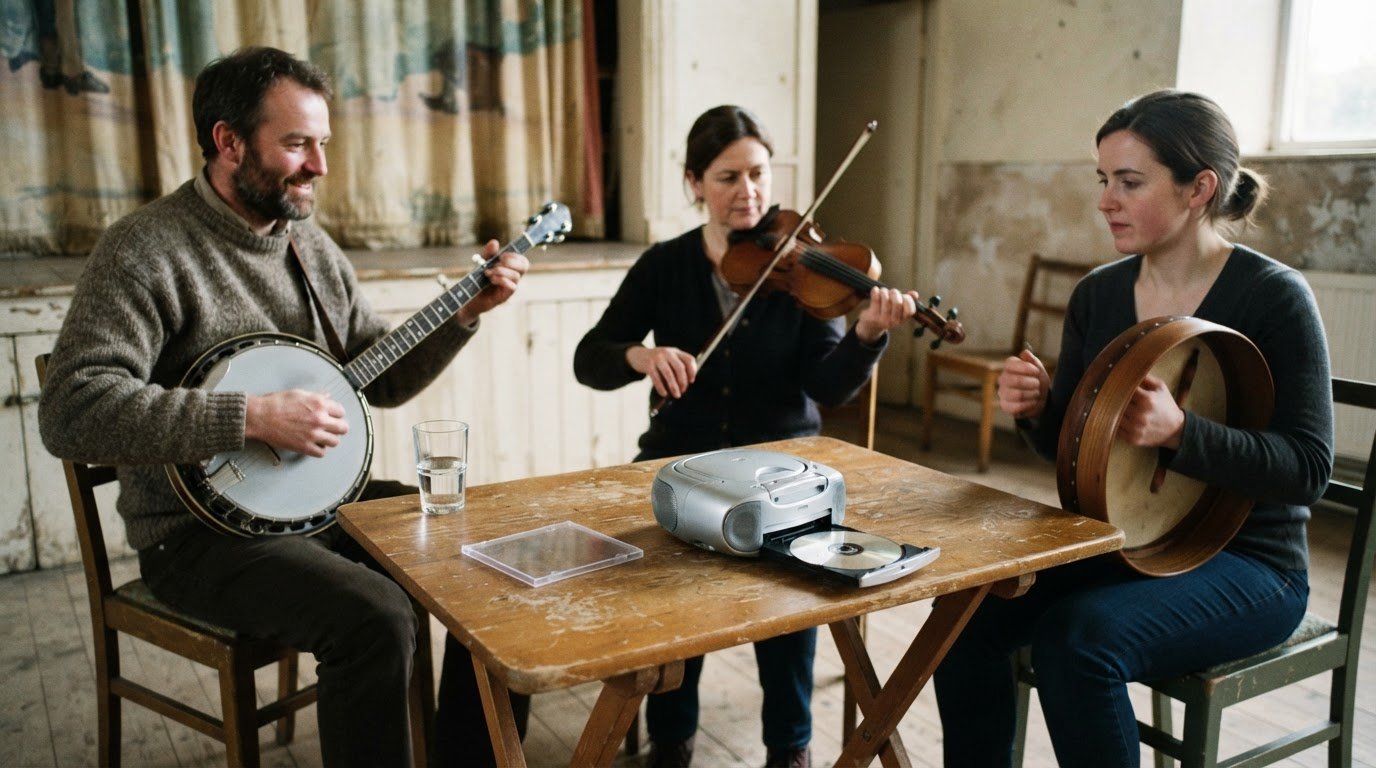
Páraic Banjo offers a way to hear Irish session music in practice, after learning how to read a session and join its tunes. Not Before Time - 39 Years in the Making features 18 tracks recorded live with expert musicians, capturing the sound of traditional Irish session playing. Listen for how the tenor banjo’s rhythm fits alongside the other instruments, and how the ensemble keeps the tunes moving together.
Choose the digital album, the physical CD, or individual digital tracks to explore the music in the format that suits you. These recordings can offer a useful listening companion as you build your ear for session style. For more information, contact Páraic Banjo.
Carry the music into your next session
Let your next session be a chance to build familiarity, not a test of how many tunes you can play. Choose one intention before you arrive: listen for how the group moves between tunes, notice where your banjo can blend, or learn a melody that catches your ear. That small focus can make the music easier to follow and your participation more thoughtful.
Good Irish banjo session etiquette grows through attention and respect for the musicians sharing the circle. Each session has its own character, so bring curiosity, adapt to the room, and let the music guide your choices. The best contribution may be a confident tune, restrained accompaniment, or simply a careful listen.
If you’d like to continue the conversation about Irish banjo and session music, contact Páraic Banjo for advice. Keep listening, keep learning, and enjoy finding your place in the music.
Frequently Asked Questions
What Is An Irish Session?
An Irish session is a shared gathering where musicians play traditional Irish tunes together, rather than a concert with a fixed programme and audience. The circle’s sound comes from players contributing to the same tune, each with a role in the music. For a newcomer, the evening can be as much about listening and learning the group’s style as playing.
What are the basic etiquette rules at an Irish trad music session?
Keep your instrument in tune and make sure it can blend at a comfortable volume. A Tucson session advises musicians to use a tuner, which helps prevent one instrument’s pitch from clashing with the others. For Irish banjo session etiquette, preparation matters: tune up before joining the circle, then listen to the group’s sound and adjust your playing rather than forcing your own level.
How can a banjo player tell which tunes are being played and join in appropriately?
Use the melody, not just a tune’s title, to decide whether you recognize the version being played. Irish tunes can have distinctive turns that help identify a particular setting. If you’re invited to join, listen for those details and follow the group’s phrasing. You can also ask for the tune’s name during a break and note it for later practice.
When should a banjo player sit out rather than play along?
Sit out when you can’t follow the tune’s melody securely, even if its name sounds familiar. A title doesn’t guarantee the session is playing the version you know. Use that tune to notice its distinctive features, then decide whether you can follow confidently next time. If not, keep listening; your banjo doesn’t need to sound throughout the evening.
How should musicians take turns leading tunes and choosing sets?
Follow the local pattern for offering tunes, since a session may leave the next choice to a lead melody player or invite turns around the circle. In a turn-taking format, you can pass if you don’t have a tune ready. If you’re visiting, consider whether your choice fits the session’s musical tradition before starting it, and let the group’s response guide what follows.

Comments