Irish tenor banjo jig recordings and the tunes behind them

What if a jig you know by one name appears in a recording under another? That small difference can make Irish tenor banjo jig recordings tricky to follow, especially when tune titles vary between players and track lists.
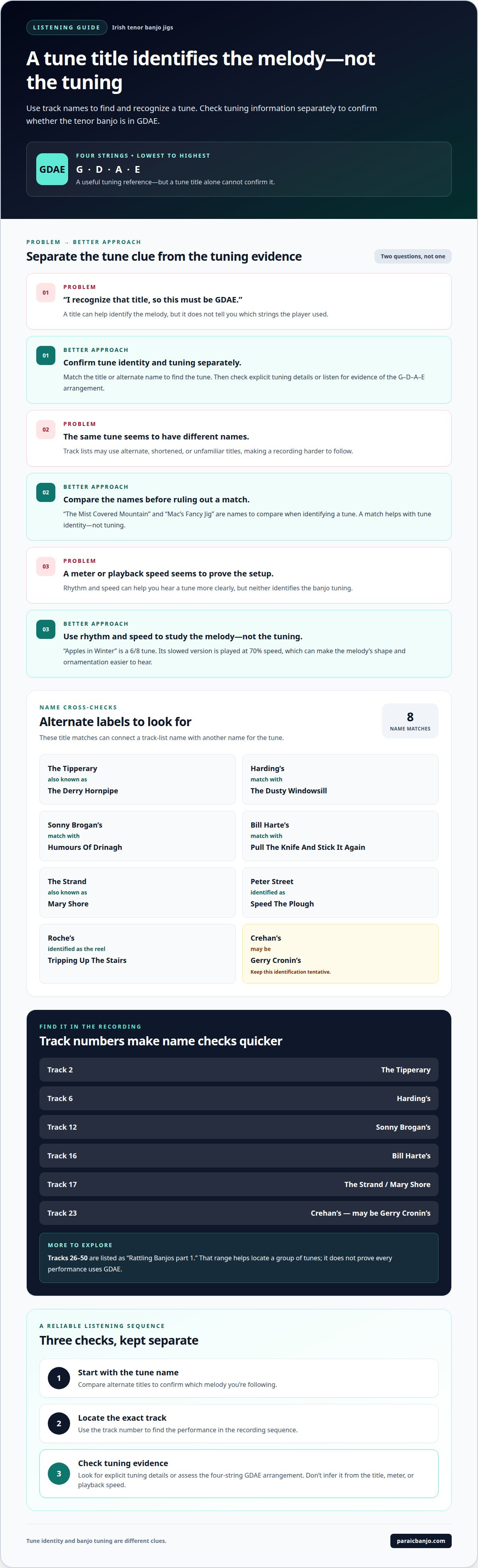
You’re right to listen for more than the melody: a familiar tune name and the banjo’s tuning both help make sense of what you hear. This guide explains how to recognize alternate tune names, including “The Mist Covered Mountain” and “Mac’s Fancy Jig,” and how GDAE tuning relates to tenor banjo jig recordings.
We’ll connect the names to the tunes, explain the tuning in plain language, and point out what to listen for as you follow the recordings. Settle in and let the jigs lead the way.
Table of Contents
Which Irish jig recordings are in standard tenor banjo tuning GDAE?
GDAE names the tenor banjo’s four strings, from lowest to highest: G, D, A, and E. A tune title alone cannot tell you whether a recording uses this tuning. To identify a GDAE performance, check two things separately: the recording’s tuning information and the tune’s identity. Track names help you find the music, but they don’t tell you which strings the player used.
If a recording labels a tune “The Mist Covered Mountain,” but you know it by another name, compare the title with “Mac’s Fancy Jig.” This can help you recognize the tune under different labels, but the title isn’t evidence of GDAE tuning. Listen to the performance or check its tuning information separately.
This distinction matters because Irish traditional tunes often circulate under alternate names. For example, “The Tipperary” is also known as “The Derry Hornpipe.” That alternate title can help identify the melody, but the track detail alone does not establish the tenor banjo tuning. Treat the title as a clue to the tune’s identity, not as a tuning label.
Track lists may also use shortened or unfamiliar names. Match “Harding’s” with “The Dusty Windowsill,” “Sonny Brogan’s” with “Humours Of Drinagh,” and “Bill Harte’s” with “Pull The Knife And Stick It Again” to connect names that might otherwise seem to describe different tunes.
Track numbers make those comparisons more practical. In the recording sequence, “The Tipperary” appears at track 2, “Harding’s” at track 6, “Sonny Brogan’s” at track 12, and “Bill Harte’s” at track 16. “The Strand,” also known as “Mary Shore,” is track 17. Use those numbers to locate the recording quickly, then assess the instrument’s tuning separately.
When two track titles seem unrelated, check whether “Peter Street” is identified as “Speed The Plough,” or whether “Roche’s” is identified as the reel “Tripping Up The Stairs.” This can help you follow an alternate label while keeping the tune’s reel identity clear. Neither title alone identifies the banjo tuning.
Other entries offer useful cross-checks. Track 23, labeled “Crehan’s,” may be “Gerry Cronin’s.” The word “may” matters here: preserve that distinction rather than treating the identification as certain. “Feral O’Gara” is track 43, “Collin’s” is track 44, “Three Sea Captain’s” is track 46, and “Sally Gardens” is track 47.
To explore a wider group of tunes, locate “Rattling Banjos part 1” in tracks 26-50 of the CD listing. This gives you a defined track range to explore, but it doesn’t prove every performance uses GDAE. Check any available tuning details for the specific recording.
Meter gives another clue about the tune, not the banjo setup. “Apples in Winter” is a 6/8 tune, so its rhythm has the lilting feel associated with that meter. A slowed-down version of its recording is played at 70% speed. Compare it with the regular-speed performance to hear the melody’s shape and ornamentation more clearly, but remember that neither speed nor meter identifies the tuning.
For a reliable listening process, start with a tune name and its alternate titles. Next, use the track number to locate the exact performance. Then look for explicit tuning information or listen for the four-string GDAE arrangement. Keep the conclusions separate: a matching tune name helps confirm the tune’s identity, while tuning evidence tells you whether that particular tenor banjo recording uses GDAE.
What are the differences between traditional and contemporary tenor banjo jig recordings?
Traditional and contemporary recordings do not have just two fixed sounds. Players make choices about ornamentation, phrasing, articulation, and how they shape a tune’s repeated parts. You can hear these details in recordings from different periods, but no single feature proves when or how a performance was made. Listen for the choices themselves, then decide which style of playing draws you in.
Situation: Two tenor banjo performances share the same jig melody but feel different. Action: Focus on how each player approaches the ends of musical phrases. One may keep a note plain; another may add quick ornamental notes or shift the emphasis. Result: You’ll hear individual interpretation instead of treating the tune as a fixed sequence every player must copy.
A useful point of comparison is how players articulate a run of notes. Some performances make the melody sound crisp and clearly separated; others connect the notes into a smoother line. Neither approach belongs exclusively to one era. Replay a short passage, tap along, and notice where the banjo player places the strongest accents. This gives you a practical way to describe what you hear.
Situation: A jig’s second part sounds familiar, yet the player’s version catches your ear. Action: Compare it with the first part, listening for small changes in ornamentation, emphasis, or the shape of the final phrase. Result: You can hear how a player adds personal character while keeping the melody recognizable. Try humming the phrase before listening again.
Also notice how the performer handles repetition. A repeated part might be played almost identically, or the second pass may include a slight change in attack or decoration. Listen through both passes before judging the arrangement. This close comparison helps you distinguish a deliberate interpretive choice from a difference that comes from another instrument or musical voice.
Situation: You want to compare two performances without relying on recording dates. Action: Choose a short passage from each and note three things: the banjo’s attack, the ornaments around the melody, and the phrase’s final notes. Result: Your comparison rests on audible details, not assumptions about what traditional or contemporary music must sound like.
Players also differ in how they make a tune breathe. A phrase can feel tightly driven, gently lifted, or spacious, depending on the spacing and weight of its notes. Listen for a pause between phrases or a note that leads into the next musical idea. These small moments can reveal the player’s feel without requiring technical vocabulary.
After each pass, make your own listening notes: write down one detail about the melody and one about the banjo’s sound. For example, note whether a phrase ends cleanly or trails into a flourish. Use those observations to compare another performance later. The goal isn’t to rank styles, but to hear the craft behind each interpretation and find the playing you want to revisit.
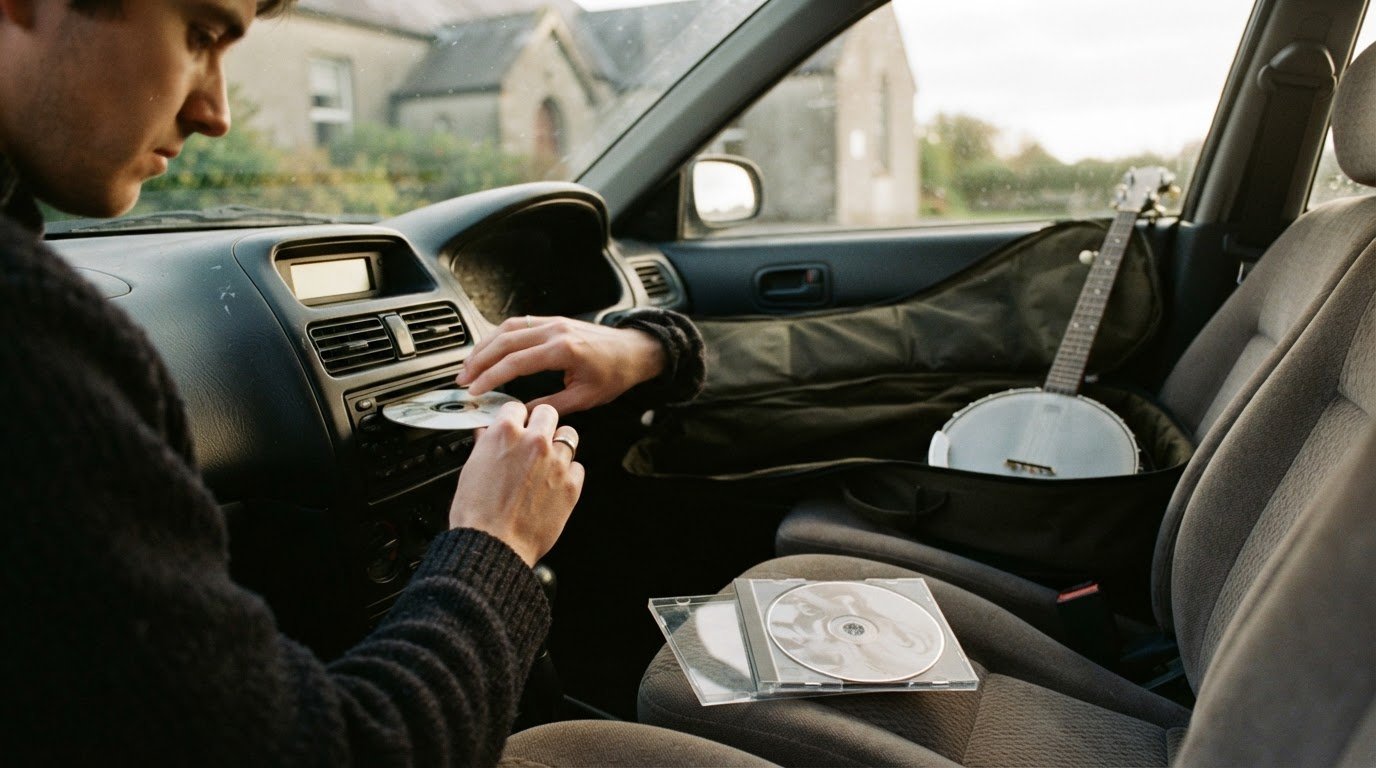
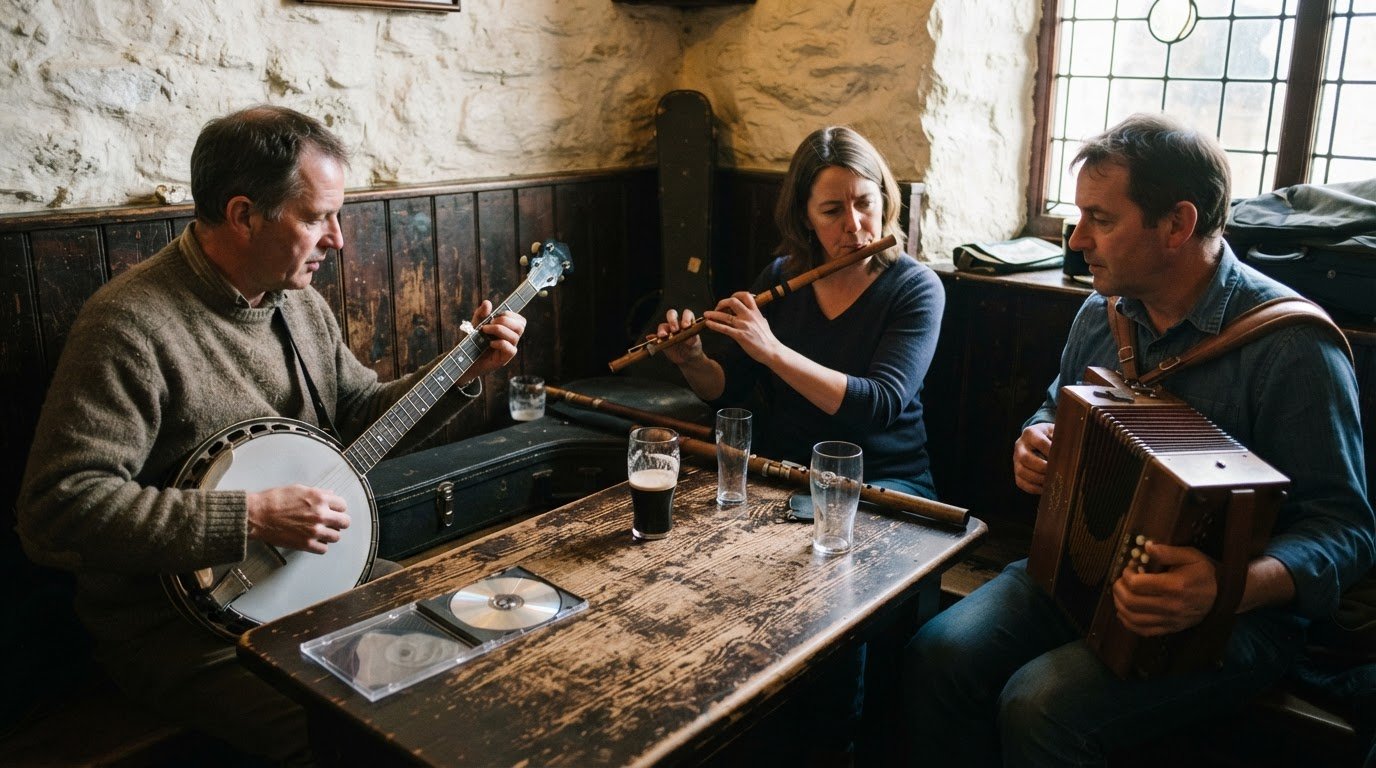
If you’d like another example of a live Irish session sound, listen to a jig-led banjo recording and notice the player’s phrasing and ornamentation.
Páraic Banjo
Páraic Banjo is a natural next listen if you want to hear Irish tenor banjo jigs in a live ensemble setting. Its debut album, Not Before Time - 39 Years in the Making, brings together 18 tracks recorded live with expert musicians, offering a fuller sense of how the banjo’s rhythmic drive sits among other instruments.
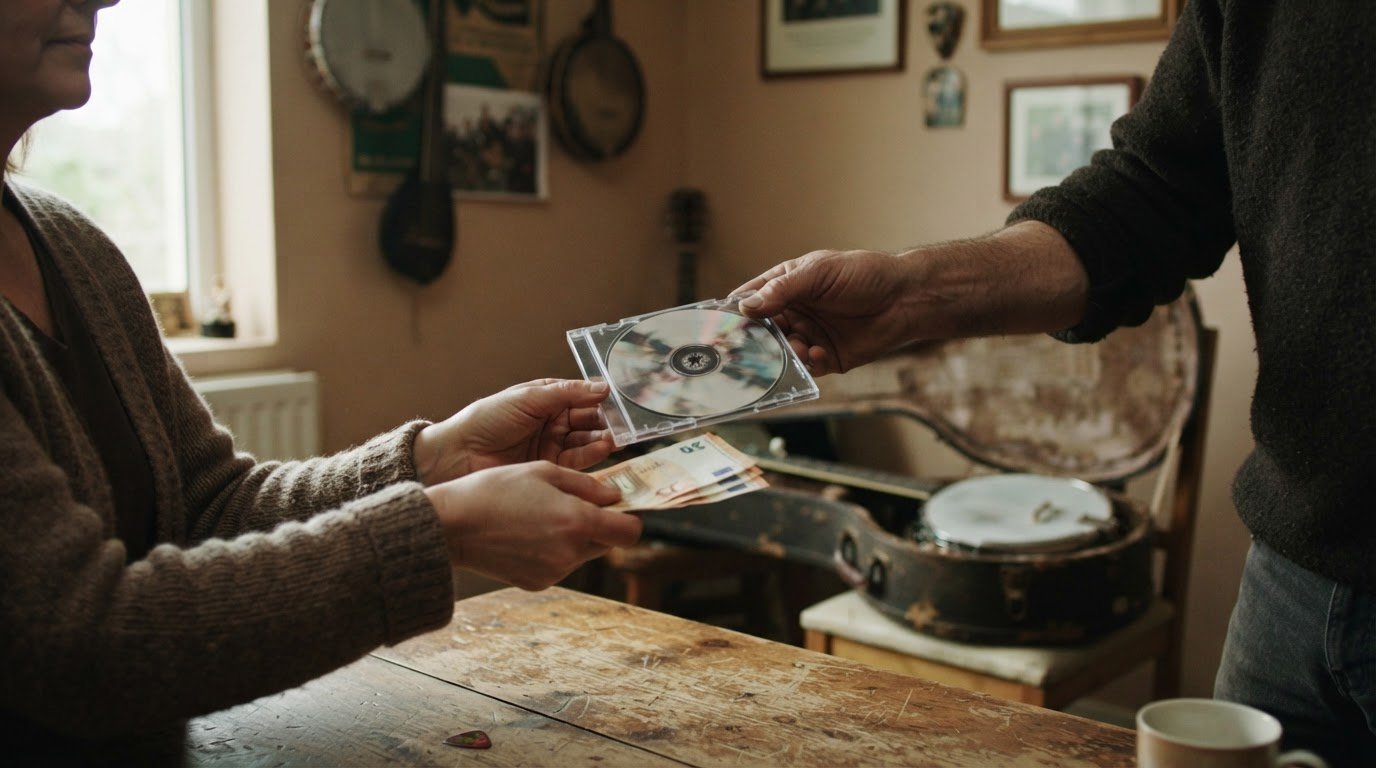
Choose the digital album to hear the collection, the physical CD for a tangible copy, or individual digital tracks to focus on particular tunes. As you listen, note each tune’s title, the banjo’s role, and how the ensemble shapes its pulse. Those details can help you connect alternate tune names with the sound and feel of a performance.
For a closer look at this music and the recordings, contact Páraic Banjo.
Keep the Tunes Playing
Take one detail from your next listening session and follow it through another tune. Maybe it’s a crisp opening phrase, a change in rhythmic lift, or the way the banjo answers another instrument. That small point of focus can make Irish tenor banjo jig recordings feel newly alive each time you listen.
Let curiosity guide your next listen: revisit a performance that stayed with you and notice what you hear this time. The tradition is full of character, with another musical turn to enjoy in every performance.
Have a question about the music? Contact Páraic Banjo, and keep the tunes playing.
Frequently Asked Questions
What are the best Irish tenor banjo jig recordings for beginners?
Choose a performance with a melody you can follow and a steady pulse you can tap along with. On your first listen, focus on the tune; on the next, follow the banjo’s rhythm. If a passage feels busy, replay a short section rather than trying to catch every note at once. This simple routine helps beginners become familiar with the music without needing to read it.
Which classic Irish tenor banjo players have recorded jigs?
Páraic Mac Donnchadha is one tenor banjo player to explore. To build a broader listening list, use album credits to identify the banjoist, then search for recordings by that musician’s name. Keep the tune and performer together in your notes: traditional tune titles can vary, so performer credits help distinguish one recording from another. This can also help you trace a playing style across performances.
What are the most famous Irish traditional jig recordings featuring tenor banjo?
There isn’t a single agreed list of the most famous recordings, so build a shortlist around the tunes and players you enjoy. Start with a jig title you recognize, then use performer credits to find other recordings of that tune. Compare how each banjoist phrases the melody and supports its rhythm. This creates a personal set of reference performances without treating popularity as a measure of musical value.
Where can I listen to Irish tenor banjo jig recordings online?
Páraic Banjo offers digital music to listen to. For focused listening, choose one tune and replay it, noticing how the banjo’s phrasing changes across the melody. If you’re exploring several performances, keep track of each tune title and performer. That small habit makes it easier to return to a recording and recognize it among alternate tune names.
What are the best modern Irish tenor banjo jig recordings?
Not Before Time - 39 Years in the Making is a contemporary recording to consider by tenor banjo player Páraic Mac Donnchadha. Rather than relying on labels like “modern” alone, listen for the player’s articulation, rhythmic feel, and interaction with the ensemble. Make a note of one phrase that stands out, then compare it with a different performance. That gives your listening a clear point of comparison.
Where can I buy or download Irish tenor banjo jig albums?
Explore Páraic Mac Donnchadha’s recorded music through Páraic Banjo. Before choosing, decide whether you want to hear a full sequence of tunes or focus on a particular performance. If you have a tune in mind, look for it by title among the available recordings. The recording details can help you choose what best fits your listening plans.
Comments