The Collector’s Guide: How to Buy Traditional Irish Music Direct from Artists in 2026

The crisp, rhythmic "lift" of a well-played tenor banjo isn't just a sound; it's a heartbeat that often gets flattened by the heavy hand of streaming algorithms. If you want to truly honor the craft, the best way is to buy traditional irish music direct from artist platforms where the soul of the session remains intact. You've probably felt that sting of disappointment when a generic "folk" playlist serves up watered-down tunes instead of the raw, regional grit of an East Galway reel. It's a common trap, but your collection deserves better than low-bitrate files that lose the "pop" of the strings and the depth of the history.
I'm going to show you how to build a world-class library of authentic recordings while ensuring your support goes straight to the source. We'll look at why CD sales in Ireland grew by 4.5 percent in 2025 and how you can use 2026 Bandcamp Fridays, like the one on May 1, to maximize your impact. Whether you're picking up a physical CD of a milestone project like Not Before Time or downloading individual digital tracks, owning the music means owning the stories behind the tunes. Let's dive into the technical details and the rich legacy that makes this tradition live and breathe.
Key Takeaways
Skip the corporate middlemen and ensure your support goes straight to the musicians who keep the living tradition vibrant.
Learn how to buy traditional irish music direct from artist sites to secure high-fidelity audio that preserves the banjo's natural, rhythmic "pop."
Use our collector's checklist to vet albums for regional authenticity, focusing on distinct styles like the soulful lift of East Galway.
Discover why uncompressed files are the only way to hear every detail of a session-style recording without the muffled quality of digital compression.
See how a definitive collection like "Not Before Time" can serve as the cornerstone of your personal library with its rich history and expert playing.
Table of Contents
The Middleman Problem: Why Where You Shop Matters for Irish Music
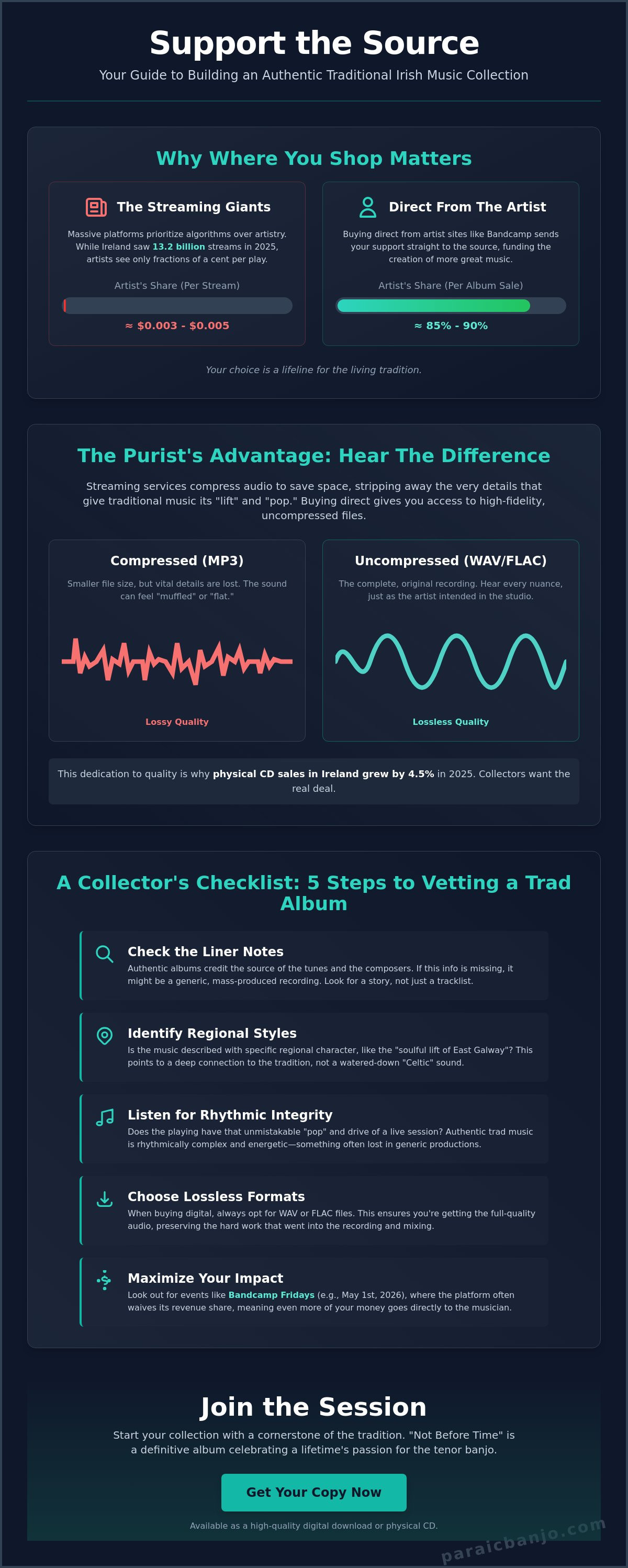
In 2026, the phrase "artist-direct" isn't just a trendy buzzword. It's a lifeline for the music we love. When you choose to buy traditional irish music direct from artist platforms, you're essentially walking into a musician’s kitchen and picking up a tune straight from the source. This connection matters because the big streaming giants, despite seeing a record 13.2 billion audio streams in Ireland in 2025, pay out fractions of a cent per play. For a traditional player, those numbers don't add up to a sustainable life. By choosing a direct route, you ensure that the weight of the musician's work is actually valued and respected.
The trouble with big distributors is that they often favor what's "safe" or "commercial." This leads to a dilution of the very things that define the tradition: the unique regional pulses and the rare tunes that have survived for centuries. To truly appreciate the depth of the history of traditional Irish music, we have to look toward the artists themselves. They are the ones holding the keys to the archive. When you buy traditional irish music direct from artist webstores, you're bypassing the digital gatekeepers who would rather sell you a generic "Celtic" mood than a raw, rhythmic reel.
The "Celtic" vs. "Traditional" Distinction
You've likely seen those "Celtic Chill" or "Irish Pub Favorites" albums in big box stores or generic playlists. These are often mass-produced and lack the rhythmic integrity of a real session. "Traditional" music implies a specific lineage and pedigree. It’s about the player’s connection to their teachers and their region. If you want the real thing, you need to look for that specific pedigree. Tip: Always check the liner notes. If an album doesn't list the specific source of the tunes or the names of the composers, it’s likely a generic product designed for background noise rather than active listening. Authentic traditional music is a conversation between the past and the present, and that conversation is loudest when you buy direct.
Where the Money Goes: Supporting the Living Tradition
Think of yourself as a modern-day patron of the arts. A single direct sale of a digital album or a physical CD does more for a musician than thousands of streams ever could. For example, platforms like Bandcamp take about 15 percent of digital sales, which drops to 10 percent once an artist hits a certain sales milestone. Compare that to the tiny fraction of a penny from a stream. These direct funds go right back into the community, supporting future independent irish music releases that keep regional styles like the soulful East Galway lift alive. Irish artists accounted for 21.5 percent of the top 100 sales in the Irish market in 2025. You can help that number grow. If you're ready to start your collection with something authentic, you can pick up "Not Before Time" as a physical CD or a digital album today. It’s a definitive statement of a lifetime's passion, and every purchase helps ensure this music isn't just a memory, but a living, breathing force.
The Purist’s Advantage: Technical Benefits of Buying Direct
When you listen to a tenor banjo, you aren't just hearing notes; you're hearing the percussive strike of the plectrum against the string and the resonant "pop" that defines the instrument's character. Standard streaming services often squash these audio files to save space, which strips away those high-frequency details. If you want to hear the music exactly as it sounded in the studio, you need to buy traditional irish music direct from artist sources. These platforms allow you to download uncompressed files, often called WAV or FLAC. Unlike MP3s, which discard data to make files smaller, these formats are "lossless," meaning they preserve every ounce of the original recording’s energy and clarity.
Direct-to-fan platforms are currently the safest bet for anyone serious about audio quality. While streaming is convenient for a casual listen, it can't compete with the depth of a high-bitrate download. This technical superiority is one reason why many collectors are returning to physical media; in fact, CD sales in Ireland grew by 4.5 percent in 2025. Organizations like The Arts Council continue to support the development of these high-quality projects, recognizing that the preservation of the tradition depends on the quality of the record we leave behind. When a project has been 39 years in the making, like my own debut, every bit of that audio data represents a lifetime of refined technique that deserves to be heard clearly.
The Soul is in the Liner Notes
One of the biggest losses in the digital age is the disappearance of the "Digital Booklet." When you buy direct, you usually get access to extensive liner notes that streamers simply exclude. These notes are essential for understanding the subtle differences between East Galway and Clare styles. They turn a simple tracklist into a history lesson, detailing where a tune came from or who passed it down. Tip: Look for artists who provide detailed histories of their instruments. Knowing that a specific set of reels was played on a vintage 1930s banjo adds a layer of soul to the listening experience that a generic algorithm can never provide.
Digital Convenience Without Quality Loss
Building a high-end digital irish music library doesn't mean you have to sacrifice the ease of modern technology. When you buy traditional irish music direct from artist webstores, you typically get an immediate download link alongside your receipt. Many artists now offer bundles where purchasing a physical CD also gives you instant access to the digital album. This gives you the best of both worlds: a tactile piece of history for your shelf and high-fidelity tracks for your phone. If you're ready to hear the difference for yourself, you can start by exploring individual digital tracks from the new album to test the rhythmic lift of a true high-fidelity recording.
Comparing Your Options: Where to Find Authentic Recordings
Finding the real stuff requires a bit of a detective's eye. While many people default to the big streaming platforms, seasoned collectors know those sites are often the last place to find rare, regional gems. To get the best results, you should aim to buy traditional irish music direct from artist pages or specialized hubs. This ensures the music you're bringing into your home is the real deal, uncompromised by corporate filters. In 2026, the movement toward direct support has never been stronger. The tools available to listeners have made it easier than ever to skip the middleman and connect with the source.
Direct-to-fan platforms have become the modern town square for our community. It is a space where the music is treated with the respect it deserves. When you choose a direct purchase, you're making a choice that bypasses the digital gatekeepers who often prioritize commercial appeal over rhythmic integrity. The Irish Music Rights Organisation works to protect creators, but there is no faster way to impact a musician’s career than a direct transaction on their own terms. It provides the financial stability needed to keep the tradition moving forward into the future.
The Specialist Store Experience
Specialist hubs like the Coleman Centre in Sligo or Ossian in Cork offer a wonderful curated experience. These folks are experts in the field. They can explain the subtle differences between a Kerry slide and a North Connacht reel in a heartbeat. These shops are a fantastic resource when you want to order irish cd online and explore a wide variety of regional styles in one go. They offer global delivery and a level of expertise that big retailers simply cannot match. It’s a solid choice for discovery and building a foundation for your library.
Why the Artist’s Own Site Wins Every Time
There is something truly special about receiving a package that was likely handled by the musician themselves. When you buy traditional irish music direct from artist webstores, you often get access to perks you won't find anywhere else. This might include limited-edition physical copies, a signed CD, or even exclusive bonus tracks that aren't available on wider platforms. It builds a bridge between the listener and the performer that a generic algorithm can't replicate. You aren't just a customer; you're a patron. Tip: Check an artist’s social media bios for their official webstore link. It is the quickest way to find their preferred shop and avoid accidental third-party markups. If you're looking for a place to start, you can find the new album "Not Before Time" as a physical CD or digital download right here on this site.
A Collector’s Checklist: 5 Steps to Vetting a Trad Album
Building a collection that carries the weight of history requires more than just a quick search. You need a strategy to separate the soulful, authentic recordings from the mass-produced noise. When you decide to buy traditional irish music direct from artist sources, you're already halfway there, but knowing what to look for in the fine print is what makes you a true collector. Use this checklist to ensure every album you add to your library is a genuine piece of the living tradition.
Step 1: Identify the regional style. Real Irish music isn't a monolith. Does the playing have the driving, aggressive bow-work of Donegal or the relaxed, melodic lift of East Galway? A great album will wear its regional heart on its sleeve.
Step 2: Check the instrumentation. Look for "session" authenticity. If you hear synthesizers or programmed drums where a simple bodhrán or wooden flute should be, it’s likely a commercial product rather than a traditional one.
Step 3: Look for guest musicians. The best traditional players don't work in a vacuum. Check the credits for names respected in the community. A collaborator's presence is often a seal of approval from the tradition itself.
Step 4: Verify tune sources. Authentic recordings almost always list where the tunes came from. Whether it's a "reel from the playing of Paddy Fahy" or a "jig learned in a Clare session," these details prove the artist is connected to the lineage.
Step 5: Prioritize physical media. While digital is convenient, owning a physical copy irish music is the only way to get the full experience. The tactile feel of the sleeve and the depth of the printed notes turn a recording into a keepsake.
Vetting the Artist’s Pedigree
You can't rush the "lift" in a tune. It takes years, sometimes decades, for a player's rhythm to settle into that sweet spot where the music feels like it's breathing. When you see a debut album that is "39 years in the making," you aren't looking at a delay; you're looking at a masterpiece of patience. This kind of pedigree means the artist has put in the time in real sessions, learning the subtle nuances that a younger player might miss. In our community, expert endorsements and the respect of fellow musicians matter far more than chart positions. It's about the quiet confidence of a master who finally feels the work is ready to share.
Analyzing the Tracklist
A purist’s tracklist should feel like a well-curated session. Are there enough reels and jigs to keep the energy moving? You want to avoid "medleys" that feel like pop songs with short, flashy snippets of tunes. Instead, look for sets that allow the tunes to develop and the instruments to engage in a real conversation. Tip: A great trad album feels alive. The banjo, fiddle, and piano should be weaving in and out of each other, not just playing over a backing track. If you're ready to add a masterclass in rhythmic, soulful playing to your collection, you can buy traditional irish music direct from artist webstores and pick up "Not Before Time" as a physical CD or digital album today. It’s the perfect way to ensure your collection starts with a foundation of absolute authenticity.
Join the Session: Start Your Collection with Páraic Banjo
There is a specific kind of magic that happens when a lifelong dedication to the craft finally meets the recording studio. It is a moment of relief and celebration. After four decades of honing my style in sessions across the country, my debut project is finally here. When you buy traditional irish music direct from artist platforms like this, you aren't just adding a file to your phone. You're supporting the preservation of a specific regional heartbeat. "Not Before Time" is more than just a collection of tunes; it is a definitive statement of a lifetime's passion for the tenor banjo.
The album features 18 tracks that were carefully selected to capture the raw energy of a live session. We didn't want a sterile studio sound. We wanted the grit. We wanted the lift. Each set of reels and jigs was recorded to feel like a conversation between friends. By choosing to buy traditional irish music direct from artist webstores, you ensure that this level of detail and authenticity remains the gold standard for the genre. It is about keeping the "pop" in the banjo and the soul in the melody.
The Story of "Not Before Time"
This recording represents nearly forty years of musical evolution. It focuses heavily on the "East Galway pulse," a rhythmic style that prioritizes soul and melody over sheer speed. This is the kind of nuance that often gets lost on generic folk compilations. You’ll hear the distinct resonance of the strings and the rhythmic drive that defines our corner of Ireland. Tip: Don't skip the supplementary materials. Take a moment to read the liner notes to discover the history of my 1920s banjo. It is a vintage instrument with a voice all its own, and knowing its history makes the listening experience even more immersive. These stories turn a simple track into a piece of history.
Your Direct Impact
Your support does more than just fill a shelf. It funds the ongoing mission to keep these rare tunes alive for the next generation of players. We've made the checkout process simple for fans across the globe, whether you're in Dublin or Denver. You can choose the format that fits your collection best:
The Physical CD for the full tactile experience and printed notes.
The Digital Album for high-fidelity audio on the go.
Individual Digital Tracks if you want to start your journey with a specific set of tunes.
Every purchase is a direct contribution to the living tradition. It is time to move beyond the middlemen and connect with the heart of the music. Buy the album direct and own a piece of history today. Your collection deserves the real thing, and I'm thrilled to share this journey with you. Welcome to the session.
Secure the Future of the Living Tradition
Building a world-class collection is about more than just filling a hard drive. It's about preserving the rhythmic "lift" of the tunes and the regional grit that big streaming platforms often flatten. By choosing to buy traditional irish music direct from artist platforms, you're making a tactical choice for both audio quality and cultural preservation. You're ensuring that the soulful East Galway style remains vibrant and accessible for the next generation of listeners. It's a way to turn your passion into a direct vote for the artists who keep these stories alive.
After 39 years of traditional mastery, I've finally put these tunes to record. My debut album, "Not Before Time," features 18 tracks of pure rhythmic session music that capture the true essence of the tradition. Every purchase comes with detailed liner notes that dive into the history of the tunes and the instruments used. Buy "Not Before Time" directly from Páraic Banjo today and own a definitive piece of musical history. Your support keeps the session going. Let's keep the music alive together.
Frequently Asked Questions
Where can I buy traditional Irish music direct from artists?
The most reliable places are personal artist websites and platforms like Bandcamp. These digital storefronts allow you to skip the corporate filters and connect straight with the source. If you want to support the community, keep an eye out for Bandcamp Fridays in 2026. On dates like May 1 or August 7, the platform waives its revenue share, ensuring about 93 percent of your money reaches the musician after processing fees. It's a simple way to make a big impact.
Why is it better to buy music directly from the artist than from a streaming service?
Buying direct ensures the musician is actually paid for their craft, whereas streaming services pay tiny fractions of a cent per play. When you buy traditional irish music direct from artist webstores, you're also getting the highest possible audio quality. Streaming often compresses the sound, which can muffle the percussive "pop" of a banjo or the breath of a flute. Direct purchases often include high-fidelity files that preserve every detail of the original session.
What is the best format for downloading Irish music: MP3, WAV, or FLAC?
You should always choose WAV or FLAC if you want the best listening experience. These are "lossless" formats, meaning they don't remove any audio data to save space like an MP3 does. For a traditional collector, hearing the natural resonance of the instruments is vital. While MP3s are fine for casual listening on small speakers, WAV and FLAC files provide the clarity needed to hear the subtle rhythmic "lift" that defines the tradition.
Do independent Irish music CDs come with liner notes?
Yes, most independent releases prioritize detailed liner notes because they provide the essential history behind the tunes. These notes often list where a tune was learned, who composed it, and the specific regional style being played. When you buy traditional irish music direct from artist sites, you'll often find these notes included as a physical booklet or a digital PDF. They turn a simple album into a valuable resource for learning the lineage of the music.
How do I know if an Irish music album is authentic or commercial "folk"?
Check the tracklist and the credits for specific tune sources and respected guest musicians. Authentic traditional albums will usually name the composers or the players from whom the tunes were learned. Avoid albums with generic titles like "Celtic Moods" that lack these technical details. Real traditional music is a conversation between players. If the instrumentation sounds overly processed or features synthesizers instead of a natural session pulse, it's likely a commercial product rather than a traditional one.
Can I get physical Irish music CDs shipped internationally in 2026?
Most independent artists offer global shipping directly from their websites to fans around the world. Despite the rise of streaming, physical media is having a real moment. In 2025, CD sales in Ireland actually grew by 4.5 percent. This resurgence means artists are more prepared than ever to package and mail their work to collectors. Always check the shipping section of an artist's store for international rates and delivery times to your specific region.
What makes the East Galway style of banjo playing unique?
The East Galway style is famous for its soulful, relaxed pace and emphasis on melody over raw speed. It's about the "lift" and the rhythmic swing of the tune rather than just playing as many notes as possible. This style often features rare tunes and a specific way of phrasing that feels like the music is breathing. It's a sophisticated approach that requires a lot of patience and a deep understanding of the regional pulse to master correctly.
Is it safe to buy music from an independent artist’s personal website?
It is very safe as long as the site uses recognized payment processors like PayPal, Stripe, or Bandcamp. These services use high-level encryption to protect your financial details, so the artist never actually sees your credit card number. Before you buy, just check your browser's address bar for the padlock icon, which indicates a secure connection. Buying direct is a standard practice in 2026 and is the most effective way to build a world-class collection.
Comments