Traditional Irish Musician Gifts at Every Price

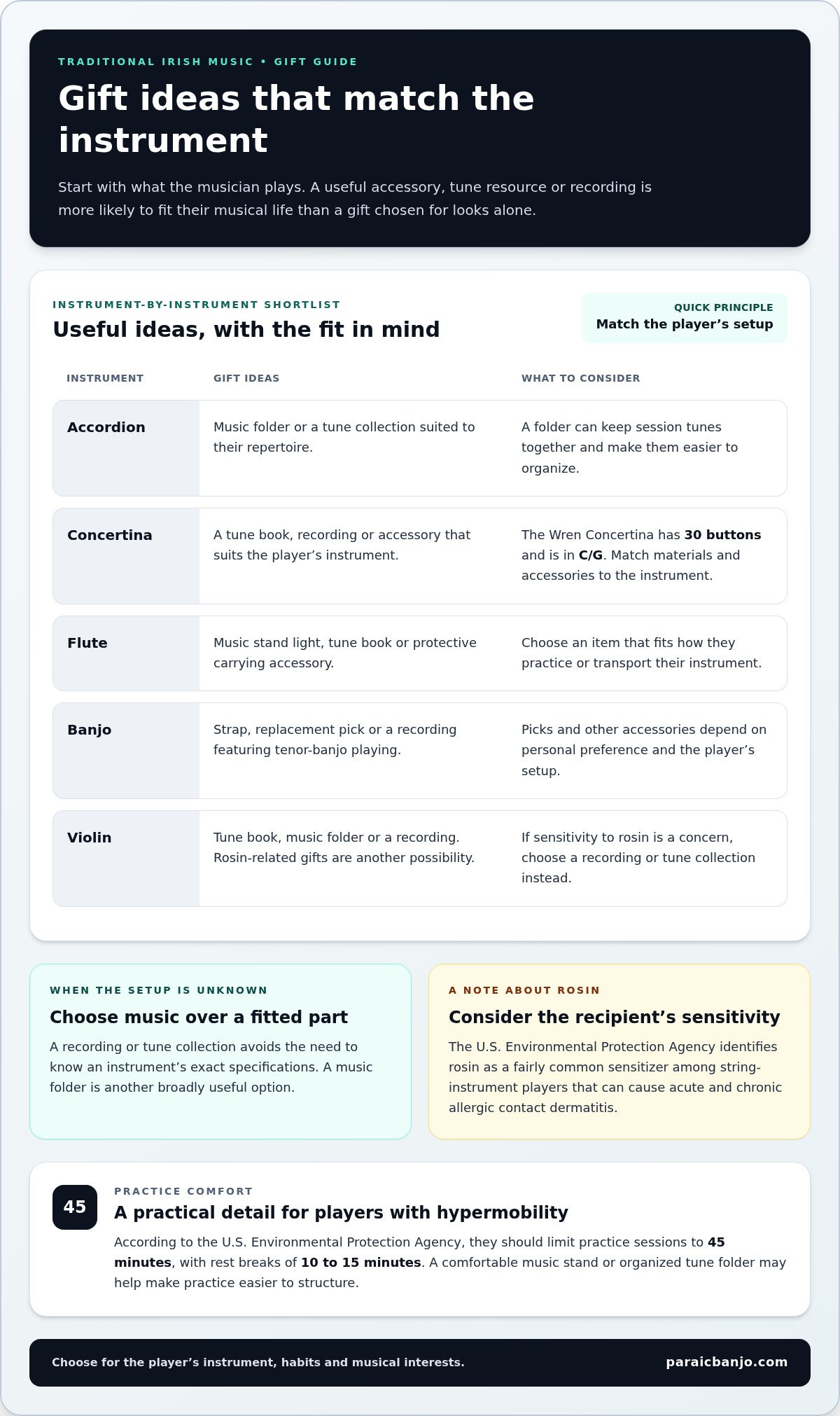
The best gift for a traditional Irish musician is one that fits the way they play: choose an instrument-specific accessory, a useful tune resource, or a recording they can enjoy between sessions. For a concertina player, the Wren Concertina has 30 buttons and is in C/G; for a bouzouki player, GDAD is the most common tuning.
It’s easy to reach for something that looks musical, but players often value a gift that suits their instrument, repertoire, or session life. If you’re unsure what they already own, recordings and thoughtfully chosen learning materials can be meaningful alternatives to gear.
This guide gathers ideas for accordion, concertina, flute, banjo, violin, and other traditional Irish musicians, then groups them by budget to help you narrow your choices. You’ll find practical ways to match a present to the player, from small, useful touches to more substantial gifts. Start with their instrument and the music they love, and the right choice becomes clearer.
Table of Contents
Accordion, concertina, flute, banjo, and violin gifts
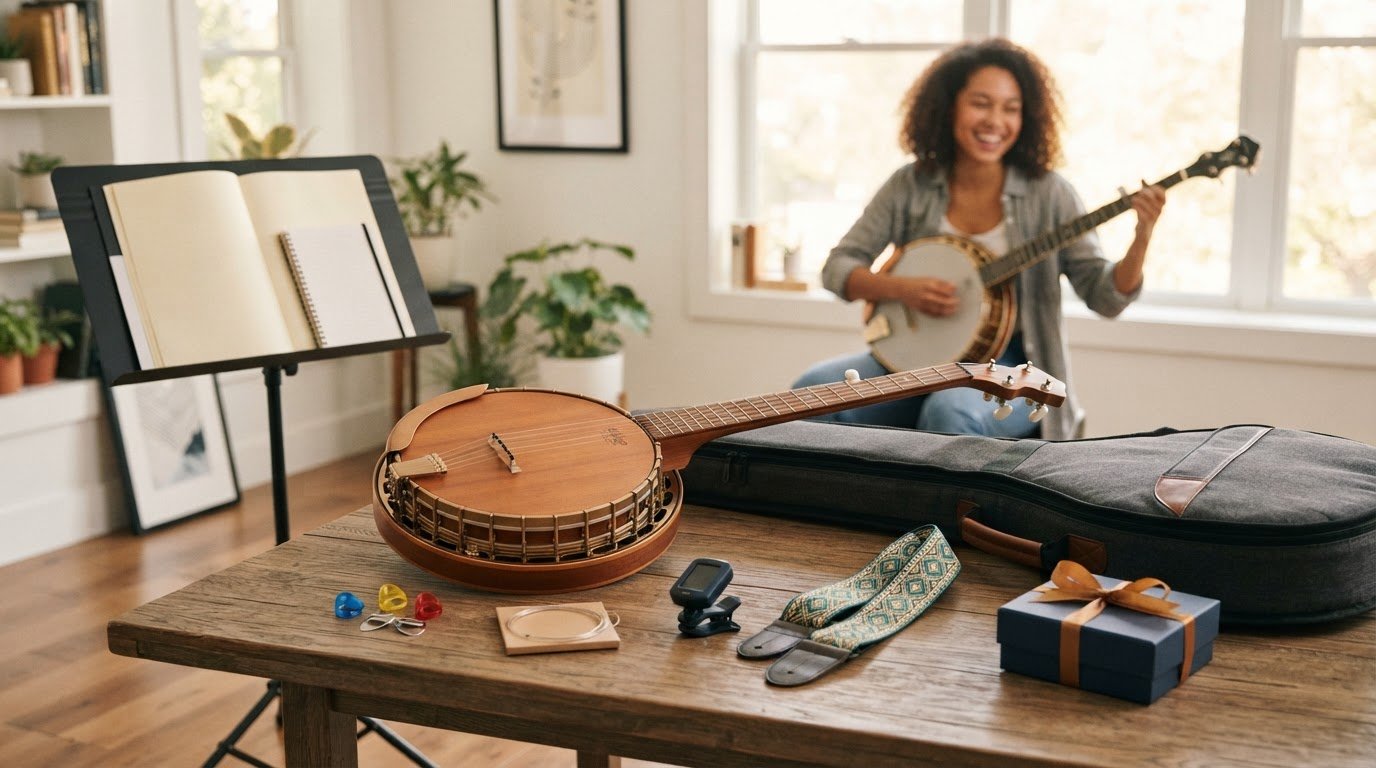
Start with the instrument, then choose a gift that supports how its owner plays. A spare accessory can be more useful than a decorative keepsake, especially for someone who brings an instrument to sessions. Before choosing, notice what they carry, replace, and use during practice. A well-matched case accessory, music stand, or care item can become part of their regular routine. The key is compatibility: a useful present should suit the player’s instrument and habits, not just its appearance.
For a concertina player, the Wren Concertina has 30 buttons and is in C/G. That detail helps explain why concertina accessories and learning materials should match the player’s instrument. Consider a tune book or recording that reflects the kind of traditional music they enjoy. For an accordion player, look for practical gifts connected to carrying, organizing, or caring for the instrument. A sturdy music folder, for example, can keep session tunes together. Choose a gift that helps them get from the case to the first tune with less fuss.
Flute players may appreciate a music stand light, a tune collection, or a protective accessory for transporting their instrument. A banjo player might value a strap, a replacement pick, or a recording featuring strong tenor-banjo playing. These choices are most useful when they match the recipient’s setup and preferences. If you’re unsure, listen for clues: do they carry loose sheet music, mention misplacing picks, or talk about a favorite player? One small detail can point you toward a present they’ll actually use.
For violinists, consider a tune book, a music folder, or a rosin-related gift. Rosin helps a bow grip the strings, but the U.S. Environmental Protection Agency identifies it as a fairly common sensitizer among string-instrument players that can cause acute and chronic allergic contact dermatitis. If the recipient has mentioned sensitivity, choose another kind of present, such as a recording or session tune collection. Practical care matters, but so does choosing something that suits the person.
Make your choice easier with a short, discreet check. Notice whether they play at home, bring their instrument to sessions, or travel with it often. Ask someone close to them about the instrument and accessories they already use. For an unfamiliar model, choose broadly useful items, such as a music folder, rather than a component that must fit precisely. Avoid buying instrument parts based only on appearance; differences in setup can make the wrong item frustrating.
Playing comfort can shape a thoughtful gift, too. Players with hypermobility should limit practice sessions to 45 minutes, with rest breaks of 10 to 15 minutes, according to the U.S. Environmental Protection Agency. A comfortable music stand or an organized tune folder may make practice easier to structure. A gift doesn’t need to change how someone plays. It can simply support the routine they already have, whether that means practicing a reel at home or joining a local session.
Use this quick instrument-by-instrument shortlist to narrow your options:
Accordion: Choose a music folder or a tune collection suited to their repertoire.
Concertina: Match music and accessories to the instrument; the Wren Concertina is in C/G.
Flute: Consider a stand light, a tune book, or a protective carrying accessory.
Banjo: Look for a useful pick, a strap, or a recording with tenor-banjo music.
Violin: Consider a music folder or recording, especially if rosin sensitivity is a concern.
When the instrument or setup is a mystery, choose music instead of a fitted accessory. A recording can bring fresh tunes into the player’s listening life without requiring you to know their instrument’s exact specifications. That makes it a strong choice for a first-time gift giver, too.
Gift ideas arranged by budget
A thoughtful present doesn’t need a large budget; it needs a clear connection to the musician’s life. Sort ideas into three tiers: small practical gifts, mid-range music-related choices, and larger instrument purchases. Then match the tier to what you know about the recipient. A player who already owns preferred accessories may enjoy new tunes more than another piece of equipment. Someone starting an instrument may value a carefully chosen learning resource or useful case item.
Smaller gifts can support everyday playing without requiring detailed knowledge of an instrument’s setup. Consider a tune notebook, a music folder, a session-themed card, or a recording. Add a handwritten note naming a reel or jig you’ve heard them play. That personal detail makes a modest gift feel connected to their musical world. For a musician who carries loose sheets, a folder is practical; for someone who enjoys listening between sessions, choose music instead.
Mid-range options allow for a more personal choice. A printed collection of traditional tunes suits someone who enjoys learning new repertoire, while a recording offers the pleasure of hearing phrasing and ornamentation. If you’re considering an accessory, first identify the instrument and how the player uses it. A banjo pick, for example, may be useful, but personal preferences vary. A gift card can also let the musician choose the exact item that fits their setup.
For a music-focused present that doesn’t depend on accessory preferences, explore traditional Irish music recordings. Listening gifts fit musicians who enjoy hearing different interpretations of familiar tunes, whether they play flute, fiddle, accordion, or banjo. Choose a physical format when you want the present to feel tangible, or a digital option when convenient listening matters most. The format should suit the recipient’s habits, not just the giver’s idea of a special gift.
Larger purchases call for more care. A bouzouki is a substantial instrument gift, not a casual surprise. Its tuning and feel need to suit the player, so involve them in the decision or contribute toward the instrument. This approach keeps the gift generous while letting the musician guide a choice that affects sound, comfort, and playing style.
Use these steps to settle on a budget-friendly direction:
Set your limit first: Decide what feels comfortable before browsing accessories or instruments.
Choose the gift’s purpose: Pick between practical support, fresh repertoire, and a listening experience.
Check what they use: Notice whether they carry loose tunes, play at sessions, or listen to recordings regularly.
Match the commitment: Keep a surprise simple; involve the musician in a major instrument purchase.
A reliable rule: the more an item affects fit or sound, the more the player should shape the choice. A tune notebook can be a happy surprise. A bouzouki deserves discussion. Whatever your budget, connect the present to one real detail, such as a favorite session tune, an instrument they’re learning, or music they return to often. That’s how a gift becomes part of the story, not just another object.
Irish music CDs and recordings
A recording gives an Irish musician more than background music. It offers a chance to hear how a tune’s lift, phrasing, and ornamentation come together. A fiddler might listen closely to bowing, while a flute player follows breath and articulation. A banjo player can focus on rhythm and how the melody sits in a session. Choose recordings featuring the instrument or style the recipient enjoys exploring, rather than selecting by cover art alone.
Start by identifying what they like to hear. Do they return to lively reels, lilting jigs, or slower airs? Do they follow a particular instrument, performer, or regional sound? A quick conversation with a friend or family member can reveal these preferences. If you’ve heard them mention a favorite tune, use it as a clue. A recording connected to music they already love feels considered, even when you’re unfamiliar with every detail.
Traditional repertoire also makes a fine companion to recordings. The original 1903 edition of Francis O’Neill’s Music of Ireland contains 1,850 melodies. Francis O’Neill is credited with saving approximately 3,500 Irish melodies. Those figures show the depth of the tradition behind the tunes musicians play today. Pair a recording with a tune collection when the recipient enjoys tracing melodies from page to performance. The combination gives them something to listen to and something to study.
Choose the format to suit the recipient’s listening habits. A physical CD works well for someone who enjoys owning a tangible album and keeping it with their music collection. A digital recording suits a listener who prefers playing music through a compatible device. If you’re unsure, look at what they use already: a CD player, computer, or phone can point you toward the more convenient choice. Avoid assuming that every musician prefers digital files or physical discs.
Pay attention to the album’s musical character, too. A recording made with several musicians can offer a sense of ensemble playing, with each instrument contributing to the tune’s pulse and color. A solo performance, by contrast, lets the listener follow one player’s interpretation more closely. For example, someone learning a reel may enjoy hearing a clear melody line; a session regular may appreciate the interplay of fiddle, flute, and accompaniment. Read track descriptions and performer details to find the right fit.
Use this short checklist before choosing:
Match the sound: Pick reels, jigs, airs, or another style the musician already enjoys.
Consider the instrument: Seek recordings that feature their instrument or an approach they admire.
Choose a format: Let their listening setup guide the choice between CD and digital audio.
Add context: Pair a recording with a tune collection if they enjoy learning repertoire.
A recording can also introduce a musician to new interpretations without requiring another instrument accessory. For extra meaning, write a short note explaining why you chose that particular sound. Mention the tune, instrument, or performance that made you think of them. That small detail turns a recording into an invitation: listen closely, find a favorite phrase, and carry the music into the next practice or session.
Perfect gift
The right present reflects how a musician actually enjoys music. Start with one observation: what do they talk about after a session? A fiddler might mention a tune they’re learning, while a flute player may admire another musician’s phrasing. Use that clue to choose between a listening gift, a tune resource, or something personal. The best fit grows from their interests, not from a general idea of what musicians should want.
Think about the recipient’s relationship with traditional music. A newer player may appreciate material that helps them explore tunes at home. A seasoned session musician might enjoy a thoughtful reminder of a particular musical connection. For example, choose a recording featuring a style they love, then add a note explaining why. That personal detail shows attention without requiring you to judge their technique or instrument setup.
Next, consider where the gift will be enjoyed. Someone who spends evenings listening at home may value an album they can return to. A musician who travels between sessions might appreciate a compact, easy-to-carry present. If they keep a tune notebook, a handwritten dedication can make it personal. If they share music with family, choose something they can enjoy together. These small details turn a broad idea into a gift shaped around their everyday life.
Personalization doesn’t need to mean engraving or custom equipment. A short message can connect the present to a memory, such as hearing them play at a family gathering or discovering a favorite reel together. Be specific: mention the occasion, the music, or the person who introduced you to the tradition. A few sincere lines are often better than a long tribute. The aim is warmth, not ceremony.
Use this simple decision path before choosing:
Notice a musical interest: Recall a performer, tune, or instrument they’ve mentioned.
Choose the gift’s role: Decide whether it should support listening, learning, or a personal memory.
Match their routine: Think about where and when they’ll enjoy it.
Add a personal note: Explain the detail that made you think of them.
For a shared present, ask another friend or family member to contribute a memory or message. A small collection of notes can celebrate the musician’s place in a group, especially after a gathering where tunes were played together. Keep the contributions focused: one favorite moment, one tune, or one reason their playing matters. That gives the gift a clear theme instead of a pile of unrelated add-ons.
Presentation can be just as thoughtful. Wrap a music-related present with a handwritten card, or place it beside a note naming the tune that inspired your choice. If the recipient enjoys discovering new music, leave room for their own interpretation rather than explaining every detail. A gift should open a door, not prescribe how they use it. Give them something that invites listening, playing, remembering, or sharing.
Before you decide, ask yourself whether the present connects to a real detail about this person. “They play music” is a starting point; “they love listening to flute-led reels” offers direction. If you can explain your choice in one clear sentence, you’ve likely found a meaningful fit. Include that reason with the gift. Often, it’s the personal thought behind the object that makes the moment memorable.
Páraic Banjo: Not Before Time - 39 Years in the Making (Physical CD)
Páraic Banjo’s Not Before Time - 39 Years in the Making offers a music-focused gift for someone who enjoys traditional Irish sessions. The album brings together 18 tracks, recorded live with expert musicians, capturing the interplay and rhythmic drive of a shared performance. Choose the physical CD for a tangible present, or the digital album for convenient listening. Individual digital tracks offer another way to pick music that suits the recipient.
This recording is a natural choice when you want to give music rather than instrument equipment. It can be enjoyed between sessions, at home, or as inspiration for exploring tunes and phrasing. For a player who appreciates traditional Irish music, let the gift carry the music forward.
Explore the album and visit Páraic Banjo to learn more.
Make the Gift Part of the Music
Choosing a gift for a traditional Irish musician can begin a shared moment, not simply an exchange. Add a note suggesting you listen together, ask them to show you a favorite tune, or bring the music along to your next gathering. That invitation gives the present somewhere to go: into conversation, a listening session, or a memory you’ll both keep.
If you’d like a music-centered option, explore Páraic Banjo’s recordings and choose what feels right for the person you’re celebrating. A present rooted in music can open the door to new listening and shared enjoyment, without needing to know every detail of their instrument or playing style.
Visit Páraic Banjo to explore the recordings, then add a personal note that makes the gift yours. Here’s to a thoughtful choice, a good tune, and many happy sessions ahead.
Frequently Asked Questions
What are the best gifts for an Irish fiddle player, tin whistle player, or bodhrán player?
Choose based on what the player wants to explore, not only their instrument. For a fiddler, tin whistle player, or bodhrán player, note a tune or performer they’ve mentioned, then look for a related musical experience. A gift for a traditional Irish musician can include a handwritten listening prompt, such as “notice how the rhythm shifts here.” It offers a fresh way to engage with music they already enjoy.
Which Irish music books, tune collections, or recordings make good gifts?
Look for a book whose notation style the recipient can comfortably read, and browse its contents for tunes they recognize. If choosing a recording, consider whether they enjoy following one instrument or hearing an ensemble’s interplay. A useful pairing is a tune collection alongside a recording of the same repertoire, so the musician can compare the written melody with a performer’s interpretation.
How much do traditional Irish musician gifts cost at different price points?
Costs vary with the item, its materials, and whether it’s an instrument, accessory, book, or recording. For a more accurate comparison, look beyond the item price: a physical purchase may also include shipping and handling, while a digital purchase has a different checkout total. A gift for a traditional Irish musician can suit different budgets; compare the complete cost before choosing.
Are there etiquette or cultural considerations when choosing an Irish-themed gift?
Choose something connected to the musician’s instrument, repertoire, or session life rather than relying on Irish-themed looks alone. A recording or tune resource can be a thoughtful option when you’re unsure what gear they own.
Comments